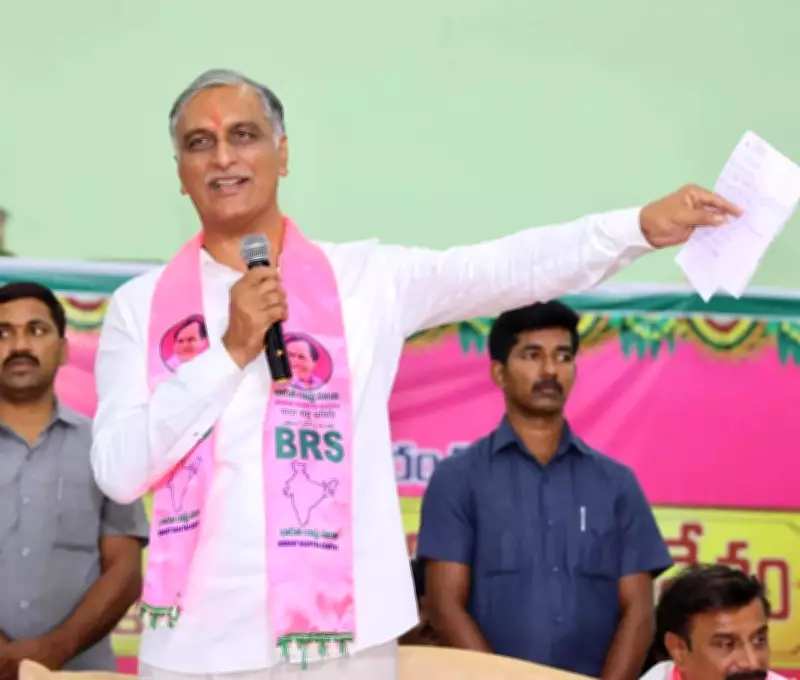
Senior BRS leader T Harish Rao on Sunday demanded that the Telangana government convene an all-party meeting, pass a resolution in the assembly opposing Andhra Pradesh's Godavari-Cauvery link proposal, and press the Centre to protect Telangana's interests.
Allegations against the interlinking plan
Addressing a media conference at the Telangana Bhavan, Harish claimed that the proposed interlinking plan, being pursued through Polavaram and Nallamala Sagar, bypasses Telangana and offers no tangible benefit to the state. He alleged that successive proposals, including the Banakacherla and Nallamala Sagar projects, had been opposed by the BRS on the grounds that they could adversely affect Telangana's water entitlements.
He accused the Telangana government of compromising the state's water rights by linking the proposed Godavari-Cauvery river interlinking project with clearances for the Palamuru project. He further alleged that the move could result in substantial losses to Telangana's share of Godavari waters.

BRS ready for agitation
The former minister said the BRS was prepared to join or lead agitations, including protests in Delhi, if necessary, to oppose what he described as attempts to divert Godavari waters without adequately addressing Telangana's claims and pending irrigation projects. Harish alleged that the current alignment of the Godavari-Cauvery link seeks to transfer water from Polavaram to Andhra Pradesh and further south without passing through Telangana territory.
According to him, earlier discussions had envisaged linking the rivers through Ichampalli or Sammakka Sagar and then Nagarjuna Sagar, thereby ensuring benefits to Telangana as well.
Potential water loss and demand for transparency
The BRS leader claimed that Telangana could lose up to 211 tmc of water if pending clearances for several projects and the state's claims in future allocations are affected by the proposed interlinking arrangement. He also questioned the state's participation in multiple meetings on the issue and demanded that the minutes of those meetings be made public.