

Budget Debate Stalls in Lok Sabha Amid Opposition-Government Standoff
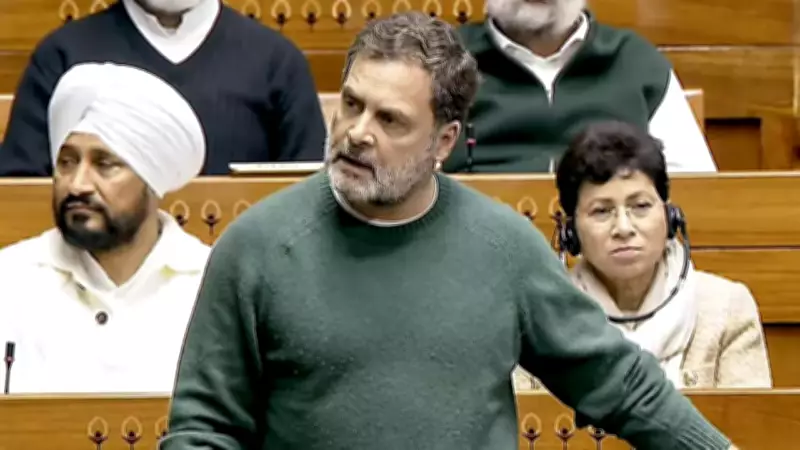
The Lok Sabha's discussion on the Union Budget has been paralyzed for the sixth consecutive day, as a bitter standoff between the government and the opposition continues to disrupt parliamentary proceedings. The core of the impasse revolves around the Leader of the Opposition, Rahul Gandhi's, insistence on being allowed to raise specific issues before the budget debate proceeds, and the government's firm refusal to accommodate his demands.
Opposition Accuses Government of Avoiding Scrutiny
Amid the ongoing deadlock, opposition leaders, including Rahul Gandhi of the Congress and Akhilesh Yadav of the Samajwadi Party, have leveled serious accusations against the government. They claim the ruling BJP is deliberately avoiding a substantive discussion on the budget because it fears tough questions regarding the Indo-US trade deal and its potential adverse impact on Indian farmers. In contrast, the BJP has countered by asserting that the opposition itself is unwilling to engage in a proper budget debate, preferring instead to create disruptions.
In an attempt to break the logjam, a delegation of senior opposition figures—Rahul Gandhi, Akhilesh Yadav, Abhishek Banerjee of the TMC, and T R Baalu of the DMK—met with the Lok Sabha Speaker after the House was adjourned for the day. Following the meeting, Rahul Gandhi indicated that a tentative resolution had been reached, with an understanding that he would be permitted to raise his concerns on Tuesday, after which the budget discussion would commence. The opposition is also concurrently pushing for the revocation of the suspension of its MPs.

Parliamentary Proceedings Descend into Chaos
The situation escalated on Monday when presiding officer Sandhya Roy declined to allow Rahul Gandhi to speak and instead called upon Congress MP Shashi Tharoor to initiate the budget discussion. This move triggered immediate protests from the opposition benches. Rahul Gandhi contended that the Speaker had previously committed to allowing him to speak and accused the Chair of reneging on its word.
However, Parliamentary Affairs Minister Kiren Rijiju strongly contested this claim, describing it as "not being 100% correct." Rijiju clarified that he was present during a meeting between the Speaker and Congress leader K C Venugopal, where it was decided that Rahul Gandhi should outline the issues he wished to raise. This, he explained, was to ensure that if any allegations were made against the Speaker, a proper reply could be furnished. "There was no commitment that only the LoP would be allowed to speak," Rijiju emphasized.
Key Issues Raised by the Opposition
Speaking to reporters, Rahul Gandhi detailed the specific issues he intends to raise. These include:
- The alleged denial of speaking opportunities to the Leader of the Opposition and other opposition members during the motion of thanks, while a BJP MP was permitted to speak.
- The ongoing suspension of opposition MPs from the House.
- Concerns over what he described as an "idea floated" that the Prime Minister faced a security threat inside the Lok Sabha.
Gandhi asserted, "The PM was scared of coming to the House not because of members, but because of what I was saying." He was referring to his announcement last Wednesday that he would present a book by former Army Chief M M Naravane on Chinese aggression to the Prime Minister if he attended the House.
Rajya Sabha Also Witnesses Disruption
The turmoil spilled over into the Rajya Sabha as well. The opposition staged a walkout after Chairman C P Radhakrishnan did not permit Leader of the Opposition Mallikarjun Kharge to speak about the situation in the Lok Sabha concerning Rahul Gandhi. This action underscored the deepening rift and coordinated protest strategy of the opposition across both Houses of Parliament.

Casting further doubt on the government's intentions, Akhilesh Yadav and Rahul Gandhi jointly stated that the opposition is particularly keen on a thorough budget discussion due to perceived "dheel" (leniency) in the trade concessions granted by the government to the United States. They argue that such concessions could have significant repercussions for domestic sectors, especially agriculture, warranting rigorous parliamentary examination.
The continued stalemate highlights the intense political friction and raises serious questions about the smooth functioning of Parliament during a critical budget session, with both sides entrenched in their positions and no immediate resolution in sight.





