

Beyond Party Manifestos: Candidates Pitch Local Promises from AI Schools to Podcast Studios
In a strategic move to connect more intimately with voters, several candidates in Assam are moving beyond the broad pledges outlined in party manifestos. They are announcing highly specific, constituency-focused promises designed to address local needs and aspirations directly. This trend highlights a shift towards hyper-local campaigning, where candidates tailor their pitches to resonate with the unique challenges and opportunities of their electoral districts.
From Broad Visions to Localized Solutions
While all major political parties have released their election manifestos, featuring statewide commitments such as increased daily wages for tea garden workers, expanded government employment, and enhanced healthcare infrastructure, a number of individual candidates are taking a more granular approach. These candidates, including those from the Bharatiya Janata Party (BJP), are crafting proposals that speak directly to the concerns of their specific constituencies, aiming to forge a stronger, more personal bond with the electorate.
Innovative Pledges Targeting Youth and Urban Issues
In Guwahati, this localized strategy is manifesting in creative and contemporary promises. BJP candidate for the Guwahati Central constituency, Vijay Kumar Gupta, despite being in his seventies, has proposed establishing a creators' studio to support the city's burgeoning gig and content economy. This initiative is clearly aimed at attracting young, tech-savvy voters.

"I plan to sign memorandums of understanding with various national institutions, including the National School of Drama. The goal is to assist content creators who often lack the necessary logistical support for production," Gupta explained, framing his promise as a direct investment in local youth talent and economic innovation.
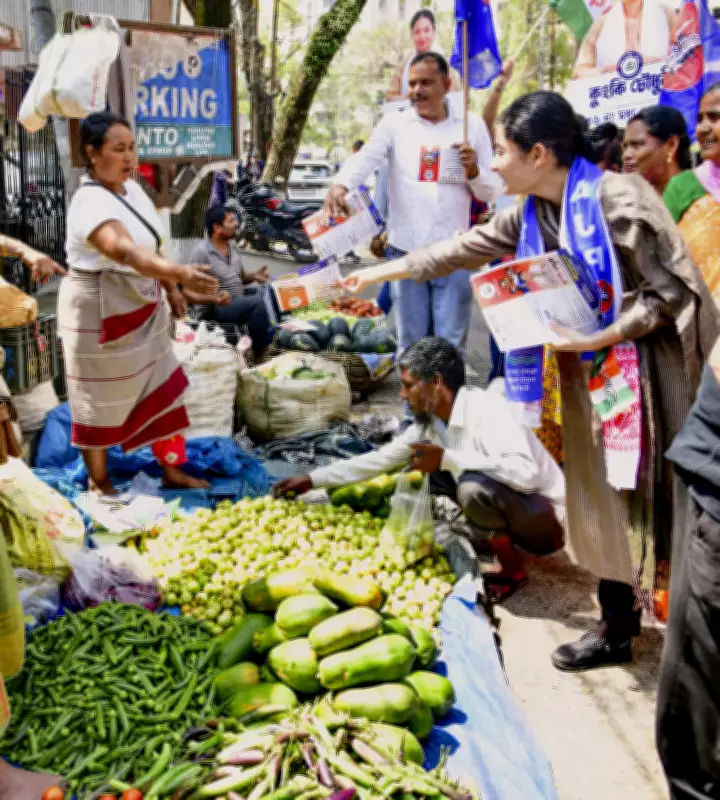
His opponent, Kunki Chowdhury of the Assam Jatiya Parishad (AJP), is a Gen Z political debutant who is countering with pledges focused on employment and urban livability. She has vowed to set up a skill hub to provide training and job opportunities for young people, addressing the critical need for career readiness. Additionally, to tackle the persistent problem of traffic congestion in Guwahati, Chowdhury has promised to implement smart parking facilities within her constituency, though specific operational details have yet to be fully disclosed.
Chowdhury, who entered politics this year after completing a master's degree in educational leadership from University College London, brings a fresh perspective focused on practical solutions for young commuters and job seekers.
Tech-Driven and Welfare-Oriented Promises in Dispur
The trend of specific promises extends to the Dispur constituency, where BJP candidate Pradyut Bordoloi has unveiled a suite of technology-driven and welfare-oriented initiatives. His key proposals include the establishment of an AI super school and a scheme to provide family doctors for economically weaker sections (EWS) of society.
Bordoloi, a former Lok Sabha MP who recently switched from the Congress to the BJP, emphasized the growing importance of artificial intelligence in education. He stated that the proposed AI super school would offer significant benefits to students, preparing them for a future dominated by technological advancements.
Furthermore, he announced the 'Deeksha Maitrayee' scheme. Under this program, educated women would be engaged through non-governmental organizations to support the academic development of students from economically disadvantaged families. This initiative is complemented by his pledge to ensure access to family doctors for EWS households, addressing a crucial gap in healthcare accessibility.
Bordoloi is contesting against Congress candidate Mira Borthakur Goswami in the prestigious Dispur constituency, making these detailed, local promises a central part of his campaign strategy to differentiate himself and connect with voters on issues of immediate, practical concern.

In summary, the current electoral landscape in Assam is witnessing a notable evolution in campaign tactics. Candidates are increasingly supplementing broad party manifestos with highly specific, constituency-level promises. From podcast studios and AI schools to skill hubs and family doctors, these pledges represent a concerted effort to engage voters directly, addressing localized needs in education, employment, healthcare, and urban infrastructure in a bid to secure crucial electoral support.





