

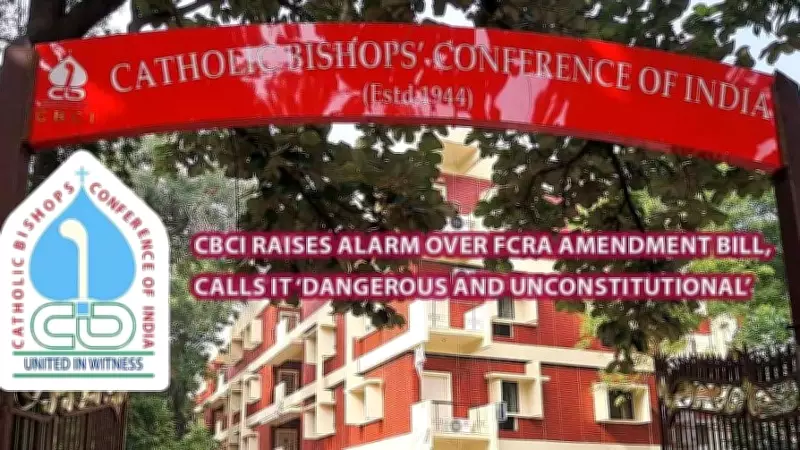
Catholic Bishops' Conference of India Condemns FCRA Amendments as Overreach
The Catholic Bishops' Conference of India (CBCI), the apex body representing the Catholic community in the country, has issued a strong statement criticizing the proposed amendments to the Foreign Contribution Regulation Act (FCRA). In a formal declaration released on March 27, 2026, the CBCI expressed deep concern over what it perceives as undue interference in the functioning of minority educational and charitable institutions across India.
Excessively Stringent Regulatory Framework Alleged
The CBCI specifically highlighted that the amendments represent a deliberate attempt to bring minority institutions under what it describes as an excessively stringent regulatory framework. According to the bishops' conference, this move could severely hamper the autonomy and operational freedom that these institutions have traditionally enjoyed under constitutional protections.
The statement emphasized that such regulatory steps not only threaten the unique character of minority-run establishments but also pose a significant challenge to their ability to serve communities effectively. The CBCI warned that increased bureaucratic hurdles and compliance requirements could divert resources away from educational and social welfare activities toward administrative burdens.

Undermining Democratic Principles
In a particularly pointed critique, the CBCI asserted that the FCRA amendments undermine fundamental democratic principles enshrined in the Indian Constitution. The conference argued that the right of minority communities to establish and administer educational institutions of their choice is a cornerstone of India's pluralistic democracy.
The bishops' body expressed concern that the proposed changes could set a dangerous precedent for governmental overreach into religious and minority affairs. This represents a worrying trend toward centralization of control that contradicts the spirit of federalism and diversity that defines our nation, the statement noted.
Historical Context and Constitutional Protections
Minority institutions in India have long operated under specific constitutional safeguards, particularly Article 30 of the Constitution, which grants religious and linguistic minorities the right to establish and administer educational institutions. The CBCI pointed out that the FCRA amendments appear to conflict with these protections by introducing what they view as disproportionate oversight mechanisms.
The conference's statement comes amid ongoing debates about the balance between regulatory oversight and institutional autonomy in the education and nonprofit sectors. The CBCI emphasized that while transparency and accountability are important, they must not come at the cost of eroding the distinctive identity and mission of minority institutions.
Broader Implications for Civil Society
The CBCI's criticism extends beyond immediate concerns about Catholic institutions alone. The conference suggested that the FCRA amendments could have far-reaching consequences for all minority communities and civil society organizations that rely on foreign contributions for their operations.
By framing the issue as one of democratic principles, the CBCI has positioned its opposition within a larger discourse about civil liberties and institutional freedom in contemporary India. The statement calls for a reconsideration of the amendments to ensure they align with constitutional values and international human rights standards.
The development marks a significant moment in the ongoing dialogue between religious institutions and governmental authorities regarding regulatory frameworks. As the debate continues, the CBCI's stance highlights the tension between national security concerns—often cited as justification for FCRA regulations—and the preservation of minority rights in a diverse democracy.






