

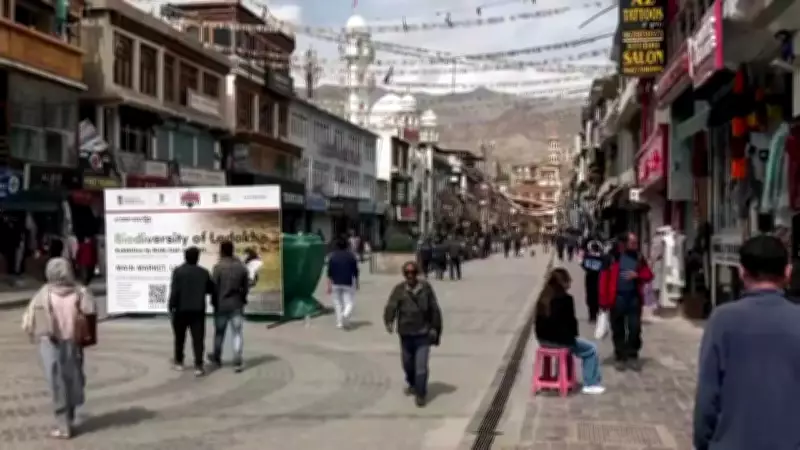
Centre Firmly Rejects Ladakh's Demands for Sixth Schedule Status and Statehood
The central government has unequivocally communicated that the Union Territory of Ladakh will not be granted either Sixth Schedule status under the Constitution or full statehood. This definitive stance emerged following high-level talks in New Delhi last week between a Union Home Ministry committee and representatives from Ladakh's two principal political organizations, the Leh Apex Body (LAB) and the Kargil Democratic Alliance (KDA).
Territorial Council Model Proposed as Alternative
Instead of acceding to the long-standing demands, the Centre has put forward a proposal for a "territorial council" model. Under this framework, the chief executive councillor of the existing Ladakh Autonomous Hill Development Council (LAHDC) would be designated as the Chief Minister, with the deputy chief executive councillor assuming the role of Deputy Chief Minister. This model represents a significant departure from the constitutional protections sought by Ladakhi leaders.
Ladakhi Leaders Dismiss Proposal as "Farce"
Speaking publicly for the first time since the February 4 negotiations, Ladakh leaders have strongly rejected the territorial council offer. KDA co-chairman Asgar Ali Karbalai declared at a gathering in Kargil, "We call it a farce. LAB and KDA rejected it, except for one KDA member, Kunzes Dolma." Karbalai revealed that Dolma, who had previously supported the KDA's agenda and was nominated as a member for the talks, unexpectedly expressed satisfaction with the current Union Territory status during the meeting.

"She told the high-powered committee that a conspiracy was hatched to remove her and that she is satisfied with the Union Territory status for Ladakh," Karbalai stated. "We will not tolerate anyone, whether Dolma or anyone else, who plays with Ladakhi identity." His remarks were met with vocal support from the Kargil gathering, where many raised slogans against Dolma and chanted in support of Sonam Wangchuk, the LAB member and climate activist currently jailed in connection with violence during statehood protests in Leh in September 2025.
Constitutional Safeguards and Financial Concerns Debated
The negotiations, led by Union Minister of State for Home Affairs Nityanand Rai, concluded without resolution. Karbalai and Ladakh Buddhist Association (LBA) president Tsering Dorje Lakrook described the talks as inconclusive. During discussions, when Ladakhi representatives reiterated their demands for Sixth Schedule status and statehood, MHA officials reportedly argued that the Sixth Schedule had become 'defunct' and largely powerless.
Karbalai strongly contested this characterization: "We disagreed. The Supreme Court has repeatedly held the Sixth Schedule as a law in itself and a strong constitutional safeguard. If it is powerful in the Northeastern states, why is it suddenly being called weak for Ladakh?"
Regarding statehood, Karbalai said the MHA's primary objection centered on Ladakh's perceived lack of sufficient financial resources. "When we asked that our legal experts be allowed to explain this, we were told they could not be called into the meeting," he recounted. "There is no Indian state that has every resource within its own territory."
Unified Front Maintained on Core Demands
Despite the setback in negotiations, Karbalai emphasized that the LAB and KDA remain united in their pursuit of two fundamental objectives:
- Granting of Sixth Schedule status to protect tribal autonomy, culture, and land rights
- Achievement of full statehood for Ladakh
The Sixth Schedule of the Indian Constitution provides special administrative arrangements specifically designed for tribal areas, offering significant autonomy in governance and protection of indigenous cultures and land rights. Ladakhi leaders view these constitutional provisions as essential safeguards for their region's unique identity and interests within the Indian Union.






