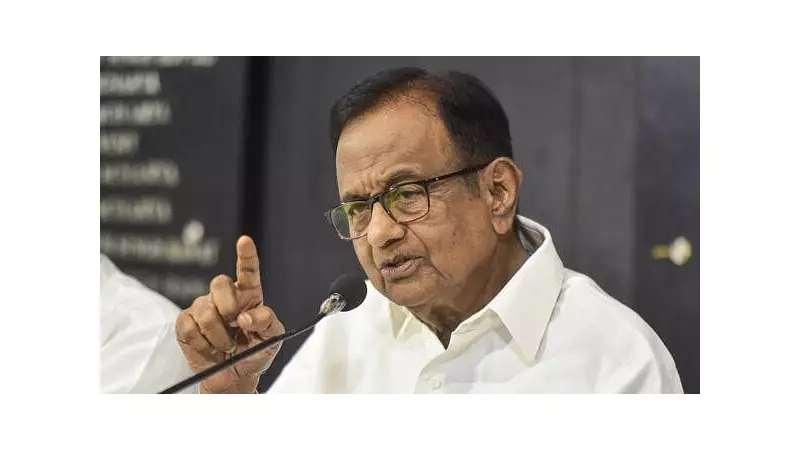
Senior Congress leader and former Finance Minister P Chidambaram has launched a sharp critique against the central government's decision to remove Mahatma Gandhi's name from the flagship rural employment scheme. He termed the move a 'second killing of Mahatma', accusing the ruling dispensation of erasing the Father of the Nation's legacy from a pro-poor initiative.
A Scheme Stripped of Its Guarantee
Chidambaram's strong remarks, made on 21 December 2025, centered on the fundamental nature of the Mahatma Gandhi National Rural Employment Guarantee Act (MGNREGA). He argued that the changes implemented by the Centre have effectively transformed the program. According to the Congress leader, the government has converted what was a 'demand-driven entitlement into a discretionary scheme'.
This shift in policy framework, he contends, undermines the very core of the legislation. The original MGNREGA was designed to provide a legal guarantee of 100 days of wage employment per year to adult members of rural households. By making it 'discretionary', Chidambaram asserts, the government has stripped away that guarantee, leaving the rural poor vulnerable and insecure.

Depriving the Rural Poor
The primary consequence of this alteration, as highlighted by the former minister, is the direct impact on India's most vulnerable citizens. 'Thereby depriving the rural poor of guaranteed employment,' he stated, pointing to the practical outcome of the policy change. For millions of workers in villages across India, MGNREGA has been a critical safety net during agricultural lean seasons and times of economic distress.
Chidambaram's criticism suggests that renaming the scheme is not merely a symbolic act but is intrinsically linked to a dilution of its substantive provisions. The removal of Gandhi's name, in his view, signals a move away from the scheme's foundational principles of rights-based entitlement and social security, principles often associated with Gandhian philosophy regarding rural self-reliance and poverty alleviation.
Political and Ideological Battle Lines
The statement from the senior Congress leader firmly places the issue within the ongoing political and ideological debates in the country. The critique goes beyond administrative changes and touches upon the perceived attempt to rewrite historical and symbolic narratives connected to the Indian National Congress and the freedom movement.
By invoking the strong phrase 'second killing', Chidambaram is drawing a direct parallel between the physical assassination of Mahatma Gandhi and what he sees as an attempt to assassinate his enduring legacy in India's social welfare architecture. This framing is likely to intensify the political discourse around the government's approach to welfare schemes and its stance on national icons.
The development sets the stage for further confrontation in Parliament and public discourse, with the opposition likely to use this as a key point of attack against the government's policies affecting rural India.