Congress Accuses PM Modi of 'Hypocrisy-Laden' Messages Ahead of Budget Session
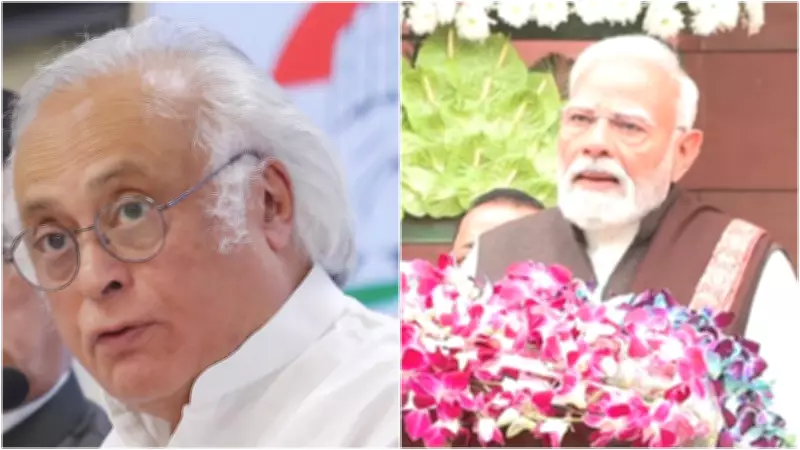
The Congress party on Thursday launched a sharp critique against Prime Minister Narendra Modi, labeling his customary pre-Budget Session address as a "hypocrisy-laden message to the nation." Congress general secretary Jairam Ramesh led the attack, asserting that the Prime Minister's remarks follow a predictable pattern of empty rhetoric without substantive engagement with opposition concerns.
Congress Leader's Scathing Critique
Jairam Ramesh, without directly naming the Prime Minister, outlined a series of grievances regarding parliamentary conduct. "He will not convene and chair all-party meetings to take the opposition into confidence on national issues," Ramesh stated, highlighting what he described as a deliberate exclusion of opposition voices from crucial legislative discussions.
The senior Congress leader further alleged that the government frequently resorts to last-minute legislative maneuvers. "He will suddenly have Bills introduced at the last minute and bulldozed through Parliament without the necessary legislative scrutiny," Ramesh claimed, suggesting a pattern of undermining parliamentary oversight.

Ramesh also criticized the Prime Minister's parliamentary presence, noting, "He will not sit in Parliament and respond to the concerns of Opposition leaders, and will instead make election rally speeches in both Houses." This comment reflects ongoing tensions between the ruling party and opposition regarding the nature of parliamentary discourse.
PM Modi's Vision for Ambitious India
In his briefing ahead of the Budget Session, Prime Minister Modi struck a markedly different tone, emphasizing national progress and international opportunities. He particularly highlighted the Free Trade Agreement with the European Union as a significant milestone, describing it as a step toward building an "ambitious India."
The Prime Minister urged Indian manufacturers to capitalize on new market opportunities created by the EU FTA, framing it as part of broader economic strategy. "This session itself is a very important one—it is the Budget Session. A quarter of the 21st century has already passed, and the second quarter is beginning," Modi told reporters, positioning the upcoming parliamentary proceedings within a larger historical context.
Modi emphasized that the next 25 years represent a crucial period for achieving the goal of a developed India by 2047. He praised President Droupadi Murmu's address to Parliament, calling it an "expression of confidence of 140 crore Indian citizens" that effectively outlined youth aspirations.
Contrasting Perspectives on Presidential Address
The Prime Minister's praise for President Murmu's speech stood in stark contrast to Congress president Mallikarjun Kharge's characterization of the address as "recycled" and lacking in accountability. Kharge had earlier criticized what he called the ritualistic nature of presidential addresses, claiming they reuse claims without clear goals or measurable outcomes.
Modi countered such criticism by emphasizing his government's commitment to practical governance. "The time has come to find solutions and not create hurdles," he stated, adding that his administration focuses on last-mile delivery of welfare schemes rather than bureaucratic formalities.
Historical Context and Parliamentary Significance
The Prime Minister also noted the historical significance of Finance Minister Nirmala Sitharaman presenting her ninth consecutive budget, marking her as the first woman finance minister to achieve this milestone. "This, in itself, marks a proud moment in the parliamentary history of India," Modi remarked, framing the session as beginning on a positive note.
He concluded with an optimistic vision of India's global standing, stating, "Confident India today has become a beacon of hope for the world and a centre of attraction globally." This statement reflects the government's narrative of India's rising international prominence amid domestic political disagreements about governance approaches.

The contrasting perspectives highlight ongoing political tensions as Parliament prepares for crucial budgetary discussions, with opposition parties questioning procedural transparency while the government emphasizes economic achievements and future ambitions.