

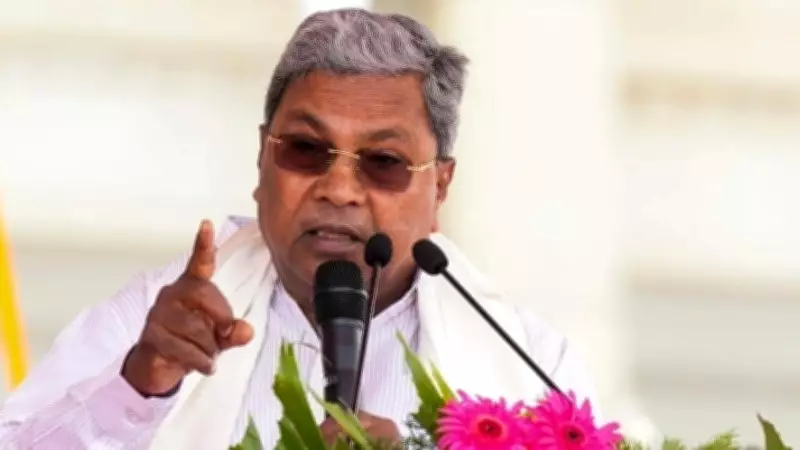
Congress Condemns Government's Handling of Women's Reservation Bill
The Congress party has launched a sharp critique against the central government, alleging that the linking of the women's reservation amendment with the delimitation process is a politically motivated move. A senior Congress leader stated that if the bill had been introduced as an independent measure, it would have garnered sufficient support to pass through Parliament without delay.
Accusations of Politicization
In a strongly worded statement, the Congress representative accused the Centre of deliberately complicating the issue by tying it to delimitation, which involves the redrawing of electoral boundaries. "If women's reservation had been introduced independently, it would have passed in the Parliament," he asserted, highlighting what he described as an unnecessary politicization of a critical matter of gender equality in Indian politics.
The leader emphasized that this linkage creates additional hurdles and delays, potentially undermining the timely implementation of the reservation policy aimed at increasing women's representation in legislative bodies. This move, according to Congress, reflects a broader strategy to avoid substantive action on women's empowerment by introducing procedural obstacles.

Background and Implications
The women's reservation bill seeks to allocate a specific percentage of seats for women in Parliament and state legislatures, a long-standing demand from various political and social groups. Delimitation, on the other hand, is a constitutional process that adjusts constituency boundaries based on population changes, which can be contentious due to its impact on political representation.
By connecting these two issues, the government has sparked controversy, with critics like Congress arguing that it dilutes the focus on gender parity. The party contends that this approach may lead to prolonged debates and legal challenges, further postponing the enactment of the reservation.
Key points raised by Congress include:
- The independent passage of the women's reservation amendment was feasible and supported across party lines.
- Linking it to delimitation introduces unnecessary complexity and political maneuvering.
- This strategy could delay or derail efforts to enhance women's participation in governance.
As the debate intensifies, political observers note that this issue highlights ongoing tensions in Indian politics regarding electoral reforms and gender justice. The Congress party's stance underscores its commitment to advocating for women's rights while challenging the government's methods.
With the next parliamentary sessions approaching, the fate of the women's reservation bill remains uncertain, pending further discussions on its linkage with delimitation. This development continues to draw attention from activists and policymakers alike, who are closely monitoring the government's next steps.






