

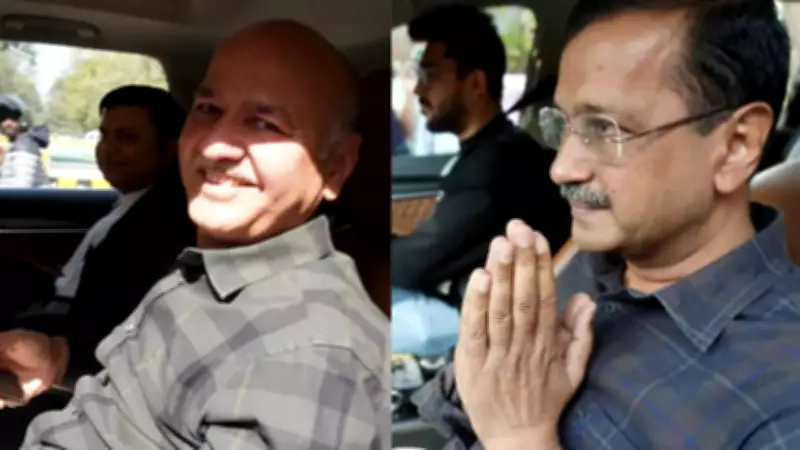
Delhi Court Discharges All 23 Accused in High-Profile Excise Policy Case
In a landmark ruling with significant political implications, a special court in Delhi has discharged all 23 individuals accused in the Central Bureau of Investigation's case concerning the now-scrapped Delhi Excise Policy 2021–22. The discharged include former Chief Minister Arvind Kejriwal and former Deputy Chief Minister Manish Sisodia, marking a pivotal moment in one of the most closely watched legal battles in recent Indian politics.
Court's Verdict: No Prima Facie Case Established
Special Judge Jitender Singh of the Rouse Avenue Court pronounced the order on Friday, delivering a comprehensive judgment that effectively terminates the criminal proceedings at the trial court stage. The court meticulously examined the prosecution's arguments and concluded that no prima facie case could be established against any of the accused persons.
The judge ruled that the material presented by the CBI failed to demonstrate an overarching conspiracy or criminal intent behind the formulation of the excise policy. Specifically, the court found that allegations regarding deliberate loopholes and undue benefits to select private liquor entities were not substantiated by concrete evidence. The prosecution's narrative, according to the court, was built more on conjecture than on legally admissible proof, and it did not withstand rigorous judicial scrutiny.

Background and Allegations in the Case
The case originated from allegations of corruption in the Delhi Excise Policy 2021–22, which was introduced by the Aam Aadmi Party government and later withdrawn amid controversy. Following a complaint by Delhi Lieutenant Governor V.K. Saxena, the CBI registered an FIR in August 2022, alleging multiple irregularities:
- The policy was designed to favor specific private liquor entities through reduced license fees and fixed profit margins.
- Intentional loopholes were created post-tender to extend advantages to certain licensees.
- Kickbacks were allegedly generated, causing financial losses to the Delhi government.
- A criminal conspiracy was purportedly hatched during the policy formulation stage itself.
Based on these claims, 23 individuals were named as accused, with Kejriwal and Sisodia being the most prominent figures. The case had led to arrests, prolonged legal battles, and significant political fallout, including the resignation of key leaders from the Delhi cabinet.
Court's Critical Observations on Investigation
Beyond discharging the accused, the court made several pointed remarks about the CBI's investigative approach, highlighting areas of concern:
- Reliance on Approver Statements: The judge strongly criticized the practice of granting pardon to an accused to turn them into an approver and then using their testimony to fill gaps in the investigation. The court warned that such methods could amount to a grave violation of constitutional principles and undermine the integrity of the judicial process.
- Recommendation for Departmental Inquiry: In a significant move, the court stated it would recommend a departmental inquiry against CBI officials for making public servant Kuldeep Singh the primary accused in the case. This remark underscores the court's disapproval of certain investigative decisions and suggests potential lapses in procedural fairness.
- Lack of Evidence for Conspiracy: The court emphasized that the CBI's theory of a criminal conspiracy was not backed by sufficient evidence. The judge observed that the agency's narrative attempted to construct a conspiracy where none could be proven, failing to meet the legal threshold required to frame charges.
Timeline of Key Events in the Excise Policy Saga
The case has unfolded over several years, with numerous twists and turns:

- November 2021: AAP government implements the Delhi Excise Policy 2021–22.
- July-August 2022: Allegations surface; CBI registers FIR; policy is withdrawn.
- February 2023: Manish Sisodia arrested by CBI.
- March 2024: Arvind Kejriwal arrested by Enforcement Directorate in a linked money-laundering case.
- February 2026: Special court discharges all 23 accused in the CBI case.
This timeline reflects the prolonged legal and political drama surrounding the policy, which impacted Delhi's governance and electoral dynamics, including AAP's loss in the 2025 assembly elections.
Implications and Key Takeaways
The discharge order carries profound implications:
- Legal Victory for Accused: For Kejriwal, Sisodia, and others, this ruling represents a major legal reprieve, though the prosecution may appeal to higher courts.
- Scrutiny of Investigative Agencies: The court's criticism of the CBI's methods raises questions about investigative rigor and the use of approver testimony in high-profile cases.
- Political Ramifications: The verdict could influence public perception and political narratives, potentially reshaping the discourse around corruption allegations against AAP leaders.
- Policy Impact: The excise policy controversy has left a lasting mark on Delhi's liquor regulation, with delays in drafting new policies affecting the sector.
In conclusion, the court's decision underscores the importance of evidence-based prosecution and judicial oversight in criminal cases. By discharging all accused, the special court has highlighted the need for concrete proof over speculative allegations, setting a precedent for future cases involving allegations of policy-level conspiracies. The ruling marks a critical juncture in a case that has captivated national attention, though its ultimate resolution may depend on further legal challenges.





