Delhi Court Clears Kejriwal and Sisodia in High-Profile Excise Policy Case
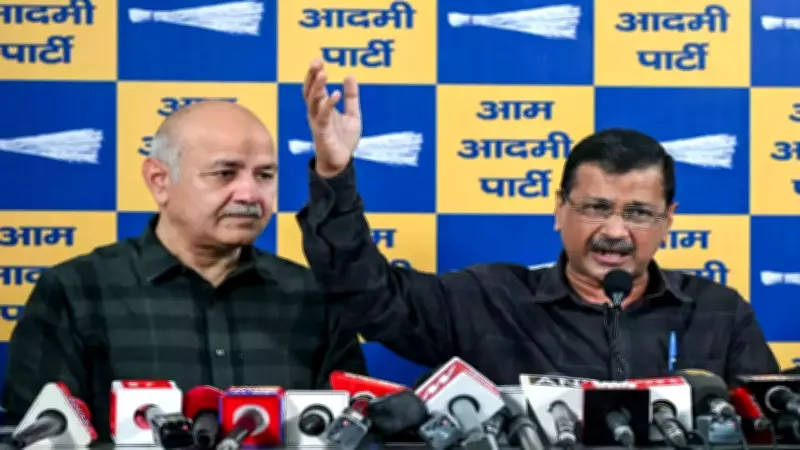
In a significant legal development, the Rouse Avenue Court Complex in New Delhi on Friday discharged former Delhi chief minister Arvind Kejriwal and former deputy chief minister Manish Sisodia from the contentious Delhi excise policy case. The court firmly ruled that the material presented before it did not justify proceeding further with the prosecution, marking a major setback for the Central Bureau of Investigation (CBI).
Court Finds Conspiracy Theory Unsubstantiated
In its detailed order, the court observed that the alleged central conspiratorial role attributed to the two prominent political leaders could not be substantiated based on the chargesheet and accompanying documents. The bench specifically noted that the allegations had "failed judicial scrutiny" and found "no criminal intent" on the part of Manish Sisodia. The court further elaborated that the theory of conspiracy "cannot survive against one constitutional authority" in the absence of cogent and convincing material.
Examination Reveals Significant Gaps in Prosecution Case
The court meticulously recorded that after examining the chargesheet filed by the CBI, along with supplementary chargesheets and all supporting documents, it discovered substantial gaps and deficiencies in the prosecution's narrative. It held that the prosecution had not been able to prima facie establish the existence of a larger criminal conspiracy involving the discharged accused. The material on record, the court emphasized, did not demonstrate the essential ingredients required to legally frame charges for the offences alleged.

The court also addressed the prosecution's argument that the offence of criminal conspiracy must be viewed in its entirety and tested at trial. However, it concluded that even at the preliminary stage of cognisance, the evidence must disclose a sustainable case, which it found lacking in the present matter.
Specific Findings on Sisodia and Kejriwal
With respect to Manish Sisodia, the court expressly recorded that no material indicating criminal intent had been brought on record by the investigating agency. Regarding Arvind Kejriwal, it noted that his name did not appear in the initial chargesheet and in three earlier supplementary chargesheets. The court further stated that the subsequent chargesheet did not provide fresh incriminating evidence sufficient to justify proceeding against the former chief minister.
In total, 23 accused persons were discharged in this high-profile case, which has drawn significant political and media attention across the nation.
Background of the Case and Legal Arguments
The CBI had alleged that a so-called "south lobby" paid approximately Rs 100 crore to influence the now-scrapped Delhi excise policy. Represented by Additional Solicitor General D P Singh and advocate Manu Mishra, the agency argued vigorously that there was adequate material to frame charges and that the matter should proceed to trial.
Senior advocate N Hariharan, appearing for Arvind Kejriwal, countered that there was no incriminating material linking his client to the alleged conspiracy. The defence contended that the later supplementary chargesheet merely reiterated earlier allegations without substantive new evidence. The defence team also questioned the legal basis of further investigation and challenged the evidentiary value of certain statements, including that of approver Raghav Magunta.
The court's decision represents a comprehensive examination of the evidence presented and underscores the judicial principle that allegations must be supported by concrete proof before proceeding to trial. This ruling is expected to have significant implications for the political landscape in Delhi and ongoing investigations into the excise policy matter.