

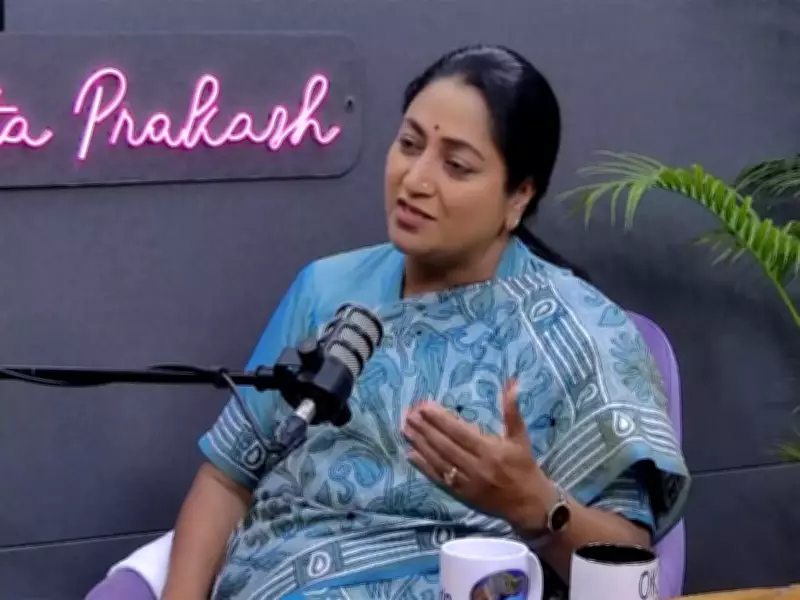
Delhi Chief Minister Rekha Gupta Attributes Pollution Crisis to Previous AAP Government's Neglect
Delhi Chief Minister Rekha Gupta has strongly asserted that the severe air pollution and the contamination of the Yamuna river are "legacy problems" stemming from years of neglect and short-term policymaking by the previous Aam Aadmi Party (AAP) administration. In an exclusive interview with ANI, Gupta emphasized that her government is now pursuing a comprehensive, long-term strategy to tackle these intertwined environmental challenges effectively.
Criticism of Temporary Measures and Call for Holistic Vision
Gupta firmly rejected criticisms that initiatives such as the Graded Response Action Plan (GRAP), Odd-Even schemes, artificial rain, and anti-smog guns have failed to yield significant results. She clarified that these steps were never intended as permanent solutions but rather as interim relief measures. "Pollution is a legacy problem resulting from the negligence of previous governments. If we look at pollution only from the perspective that the air should be clean, we will not get results. You have to work on dust, air and water together, with a holistic vision," she explained.
Taking a direct swipe at the AAP, Gupta accused previous administrations of relying excessively on temporary fixes and publicity stunts while ignoring essential structural reforms. "Sprinklers, anti-smog guns and mist can give only short-term relief. The real work should have been done on dust mitigation, public transport and long-term planning," she stated, highlighting the need for sustained efforts over quick wins.

Identifying Key Pollution Sources and Outlining Ambitious Transport Plans
The Chief Minister pinpointed vehicular emissions, road dust, and waste mismanagement as primary contributors to Delhi's persistently poor air quality, which often deteriorates to the 'severe' category during winter months. She noted that while vehicular pollution is a major factor, public transport infrastructure had been historically underdeveloped. "Vehicular emission is said to be a major cause of pollution, but public transport was never taken to the extent it should have been," she remarked.
To address this, Gupta revealed that her government has formulated a phased plan to transition Delhi's public transport system towards zero emissions. "When we came, we planned that public transport should be 100 per cent electric and on clean fuel. Today, there are around 3,600 buses in Delhi. We added 1,700 buses after coming to power, and by December 2026, this will reach 7,700. Our requirement is 11,000 buses, which we will complete by 2028," she detailed. Additionally, funding has been approved for Metro expansion, last-mile connectivity through electric vehicle autos, e-bikes, and cycles near Metro stations, along with stricter enforcement against polluting vehicles.
Comprehensive Reforms in Road Construction and Waste Management
Gupta also emphasized reforms in road construction and maintenance to curb dust pollution. She criticized past practices where different departments would repeatedly dig up roads, leading to inefficiencies. "Earlier, one department would build a road, and another would dig it again. This was the work culture of Delhi. We are changing that by enforcing ducting and accountability," she said, mentioning collaboration between PWD and MCD engineers to standardize procedures.
Linking garbage mountains directly to air pollution, Gupta highlighted a visible reduction in landfills as a result of policy-driven, time-bound actions. "Delhi generates about 11,000 metric tonnes of garbage daily. Earlier, it was never processed, and that is why mountains of garbage were formed," she stated, criticizing the Opposition for merely relocating waste. The government aims to clear legacy waste at Okhla and Bhalswa landfill sites by 2026, with Ghazipur potentially taking longer.

Yamuna River Cleanup Efforts and Future Projections
On the issue of the Yamuna river, Gupta attributed its severe pollution to untreated sewage, cattle dung, and industrial waste flowing directly into drains. "Friends, drains were falling straight into Yamuna ji. Sewage treatment plants were not upgraded. These conditions were spoiled over years," she lamented. Her administration has upgraded 37 old sewage treatment plants and initiated large-scale de-silting of drains using advanced machinery from Finland at locations like Najafgarh, Barapullah, and Sunheri Pullah.
Furthermore, steps have been taken to process cattle dung through biogas plants. "For so many years, did anyone think of setting up biogas plants? Thousands of tonnes of dung went into drains and then into Yamuna ji. We have started the first plant to process 600 tonnes, with more plants in the pipeline," she added. Addressing concerns about the pace of the Yamuna cleanup, Gupta urged patience, noting that results require time. "People ask, 'When will Yamuna be clean?' I tell them, these are conditions spoiled over the years. The steps we have taken are time-bound, and their results will be visible with time," she assured.
Collaborative Approach for a Sustainable Future
Reiterating her government's commitment, Gupta called for a collaborative effort between the administration and the public. "The government will do its bit, the public will also have to do its bit. Together, we will be able to get better air and cleaner water for Delhi," she concluded, underscoring the need for collective action to achieve lasting environmental improvements.





