40 Years Ago: Delhi High Court Rejects Death Sentence Plea in Indira Gandhi Murder Case
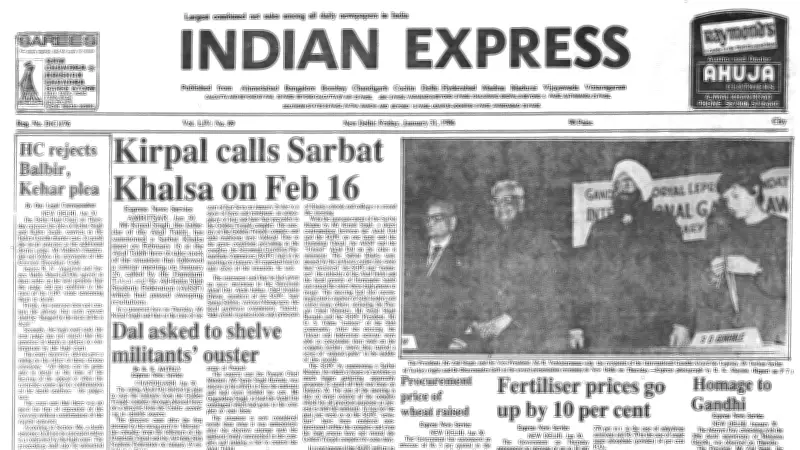
On January 31, 1986, a significant legal development unfolded in the Indira Gandhi murder case as the Delhi High Court rejected the plea of convicts Kehar Singh and Balbir Singh to quash their death sentence. This ruling marked a crucial moment in one of India's most high-profile political assassinations.
Court's Detailed Ruling on Sentencing Procedure
Justice R N Aggarwal and Justice Malik Sharif-ud-Din, in their order on the writ petition, noted that the additional district judge had not fully conformed to the rules of the Criminal Procedure Code (CrPC) while sentencing the convicts to death. However, despite identifying these procedural omissions, the High Court did not base its final ruling on these technicalities, maintaining the death penalty verdict that had been previously imposed.
Akali Dal Shelves Golden Temple Operation Plan
In a related political development, the ruling Akali Dal shelved its plan to use physical force to drive militants out of the Golden Temple complex in Amritsar. This decision came following a directive from the Centre, which intervened after an initial attempt to "liberate" the complex from followers of the Damdami Taksal and the All-India Sikh Students' Federation on January 19 ended in failure.

Martyrs' Day Observance with High-Profile Tributes
The same day also marked Martyrs' Day, coinciding with the 39th death anniversary of Mahatma Gandhi. The nation's top leadership paid their respects at Rajghat, with President Zail Singh, Vice President R Venkataraman, and Prime Minister Rajiv Gandhi visiting the memorial early in the morning to offer floral tributes at the Mahatma's samadhi.
Government Announces Fertiliser Price Increase
In economic news, the Government announced an immediate increase of up to 10 per cent in fertiliser prices. This measure was intended to help reduce subsidy levels for fertilisers, which were projected to reach approximately Rs 2,000 crore in the current financial year. While the exact reduction in subsidy was not officially disclosed, the price adjustments were significant:
- Urea: Increased from Rs 2,150 to Rs 2,350 per metric tonne
- Diammonium Phosphate: Increased from Rs 3,350 to Rs 3,600 per metric tonne
This price hike represented a substantial policy shift aimed at managing government expenditures while maintaining agricultural productivity support.