Dwarka: A Planned Delhi Sub-City Navigating Civic Challenges
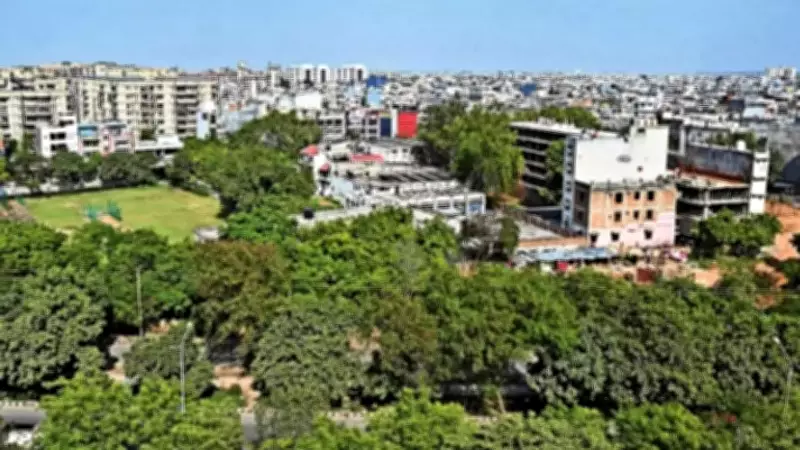
On any typical morning, as shop shutters roll up and walkers stroll through parks, Dwarka feels less like a standard Delhi colony and more like a self-contained town. Retired residents exchange greetings under kadam trees, roads fill with office-goers, and the drone of aircraft headed to IGI Airport serves as a constant reminder of its strategic location between the capital and the NCR skyline.
The Illusion of Completeness and Underlying Realities
Planned, orderly, and expansive, Dwarka appears complete at first glance. However, conversations with residents reveal a more nuanced story of a neighbourhood still working to bridge significant gaps. While it excels in parameters such as safety, cleanliness, greenery, community connect, and social cohesion, Dwarka is dragged down by issues related to accessibility, amenities, and the cultural narrative often associated with older south Delhi colonies.
Historical Context and Uneven Evolution
Located on Delhi's southwestern edge, Dwarka was envisioned as a modern residential alternative to crowded neighbourhoods. It stands as one of Asia's largest planned sub-cities, organised into sectors dominated by cooperative group housing societies. Despite this grand vision, residents report that evolution has been uneven over the years.

Rejimon C K, a resident of Sector 10, recalls purchasing his flat when much of the area was still under construction. "Our sector was just taking shape," he says, describing dusty roads and vacant plots. While the area has transformed into a bustling residential hub, he notes that civic infrastructure has not kept pace with the rapid growth.
Greenery and Environmental Concerns
For Krishan Singh Lingwal, known as the 'Treeman of Dwarka', the neighbourhood's story is deeply rooted in its greenery. Since 2004, he has helped plant thousands of trees, stating, "When we came, everything was empty, infrastructure was missing. But there was nature." He expresses concern about the preservation of this greenery, highlighting the absence of a coordinated policy to sustain it amidst urban pressures.
Safety, Sanitation, and Civic Management Issues
Other residents, like Pankaj Sharma, urge stronger patrolling and better upkeep of public spaces. They point to incidents such as snatchings, stray dog bites, and inconsistent sanitation as ongoing challenges that affect daily life. S S Mann, who moved from East of Kailash in 2007, emphasizes that connectivity remains a significant hurdle. "Weak coordination between government agencies affects traffic management, handling of waste, and maintenance of green spaces," he explains.
Citizen Activism and Community Efforts
The residents' group that Mann is part of has been actively pursuing authorities to revive a waterbody in Sector 23, showcasing the critical role citizen activism plays in shaping the mohalla. Colonel Prem Choudhary, a resident since 2011, views Dwarka as a '21st-century town' but cautions that planning alone is insufficient. "Glitches in water supply, fragmented governance, and ecological pressures continue to test the vision," he remarks.
Acknowledging Everyday Liveability
Despite these civic challenges, residents acknowledge that Dwarka delivers on everyday liveability. Deepali Raina, who moved from Saket to Sector 9 after marriage, shares, "Dwarka is far better than many other areas. That said, issues like sanitation and access to clean water need attention." This sentiment reflects a community that appreciates its strengths while actively advocating for improvements to address persistent gaps.