

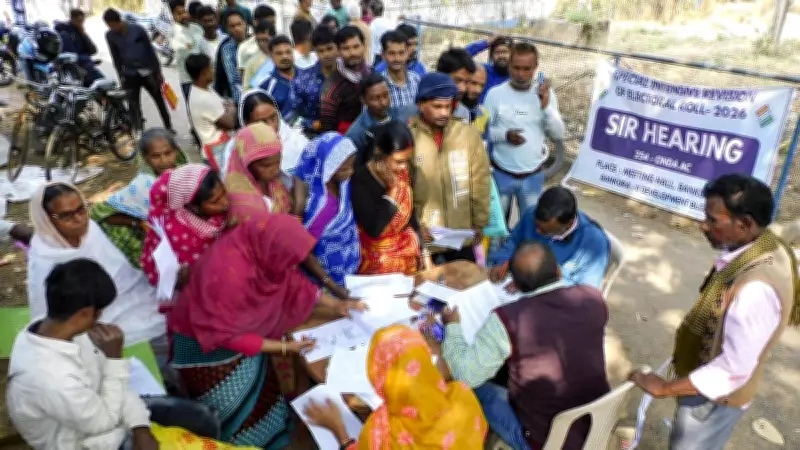
Election Commission Sounds Alarm Over West Bengal's SIR Data Anomalies
The Election Commission of India has raised serious concerns regarding the Special Intensive Revision (SIR) data from West Bengal, highlighting multiple critical irregularities that threaten the integrity of the electoral process. These findings come amid ongoing efforts to ensure accurate voter registration across the state.
Unusual 'Inter-Religion Father-Son' Relationships Detected
One of the most startling anomalies flagged by the Election Commission involves cases documented as 'inter-religion father-son' relationships within the voter database. This terminology suggests instances where the religious affiliations recorded for fathers and their sons do not align, potentially indicating fabricated or erroneous entries in the electoral rolls.
Such discrepancies are particularly troubling as they may point to systematic attempts to manipulate voter demographics or create fraudulent identities. The Election Commission has emphasized that accurate familial and religious data is crucial for maintaining transparent and fair elections, and these irregularities undermine public trust in the electoral system.

Pre-Registered Dates of Birth Raise Red Flags
In addition to the familial relationship issues, the Election Commission has identified numerous cases of 'pre-registered' dates of birth in the SIR data. A specific example cited involves an elector from Magrahat in South 24 Parganas district, who submitted a birth certificate issued by the local public health centre under the state health department.
This official document certifies the individual's date of birth as October 30, 1990. However, the Election Commission's review suggests that this and similar dates of birth were recorded in the electoral database prior to the actual issuance or validation of such documents, indicating potential backdating or improper registration practices.
The presence of pre-registered dates of birth is a significant concern because it could facilitate underage voting or allow individuals to vote multiple times under altered identities. This undermines the principle of one person, one vote, which is foundational to democratic elections.
Implications for Electoral Integrity in West Bengal
These irregularities in the SIR data have prompted the Election Commission to issue urgent directives for corrective measures. The commission is likely to mandate a thorough verification process for all suspect entries, possibly involving cross-referencing with other government databases and physical verification drives.
The findings highlight ongoing challenges in maintaining clean electoral rolls in West Bengal, a state with a history of political contention and electoral disputes. Ensuring the accuracy of voter data is not just a technical issue but a vital aspect of upholding democratic norms and preventing electoral fraud.
As the Election Commission intensifies its scrutiny, political parties and civil society groups are expected to closely monitor the rectification process. The outcome of these efforts will be critical for restoring confidence in the electoral system ahead of future elections in the state.






