The Election Commission (EC) has directed its state-level poll machinery to refer cases of individuals suspected of being foreign nationals to the competent authorities during the ongoing Special Intensive Revision (SIR) of electoral rolls. The directive was issued as part of a detailed set of instructions circulated on May 14 to state chief electoral officers, outlining the procedures to be followed during the SIR exercise.
Procedure for Handling Suspected Foreign Nationals
According to the EC's instructions, Electoral Registration Officers (EROs) are required to refer cases of suspected foreign nationals to the competent authority under the Citizenship Act, 1955. For this purpose, Assistant Electoral Registration Officers (AEROs) have been empowered to exercise the powers of EROs independently. The poll authority emphasized that booth-level officers (BLOs) must identify probable causes such as absence, shifting, death, or duplicate entries for electors whose enumeration forms have not been returned, based on inquiries from nearby electors.
Background of the SIR Exercise
The EC's move comes after its officials claimed that during preparations for the SIR in Bihar last year, several nationals from Bangladesh, Nepal, and Myanmar were found by grassroots-level functionaries. However, the poll authority did not share any numbers or proof of such individuals who were ineligible to be on the voters' list. Opposition parties had criticized the EC's claims, alleging that the SIR was a ploy to target electors not aligned with the ruling Bharatiya Janata Party (BJP) and its allies.

Phase-III of SIR Launched in 16 States and 3 Union Territories
On May 14, the EC launched Phase-III of the SIR in 16 states and three Union Territories, covering 36.73 crore voters in a staggered manner starting from May 30. The states and Union Territories involved in this phase include Delhi, Odisha, Mizoram, Sikkim, Manipur, Uttarakhand, Andhra Pradesh, Arunachal Pradesh, Haryana, Chandigarh, Telangana, Punjab, Karnataka, Meghalaya, Maharashtra, Jharkhand, Nagaland, Tripura, and Dadra and Nagar Haveli and Daman and Diu. Notably, Punjab, Jharkhand, Karnataka, and Telangana are Opposition-ruled states where the SIR will be held.
Door-to-Door Verification by BLOs and BLAs
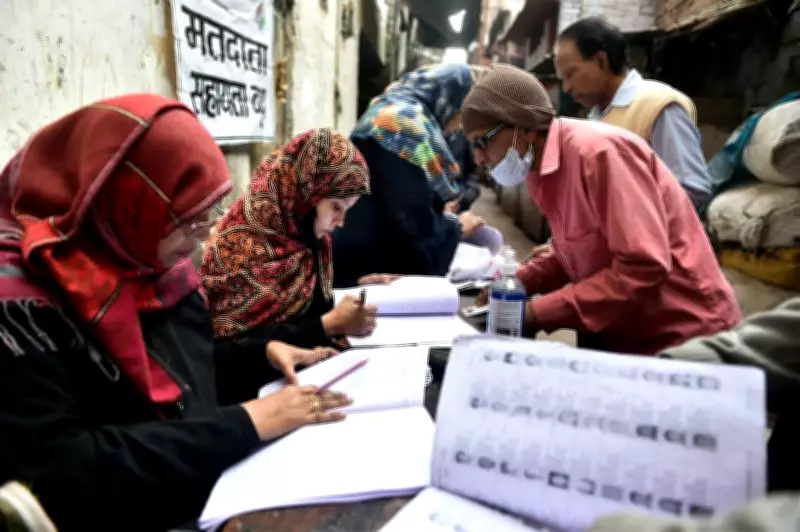
Over 3.94 lakh BLOs will conduct door-to-door verification for 36.73 crore electors during the latest revision exercise. They will be assisted by 3.42 lakh booth-level agents (BLAs) appointed by political parties during the enumeration phase. The schedule for the SIR in Himachal Pradesh, Jammu and Kashmir, and Ladakh will be announced later, taking into account weather conditions in snow-bound areas.
Previous Phases and Impact on Voter Lists
The SIR has already been concluded in Bihar, West Bengal, Tamil Nadu, Kerala, Puducherry, Uttar Pradesh, Rajasthan, Madhya Pradesh, Gujarat, Chhattisgarh, Goa, Andaman and Nicobar Islands, and Lakshadweep. A special revision exercise was conducted in Assam. In Phase-II of the SIR, the combined voters' list of nine states and three Union Territories was pruned by 10.2 percent, with over 60 lakh dead voters removed. The voter base across the 12 states and Union Territories stood at more than 50.99 crore when Phase-II was announced on October 27 last year. Post the exercise, the voters' list stands at 45.81 crore, marking a decline of over 5.18 crore.