Election Commission Urges 22 States and UTs to Accelerate Voter List Preparations
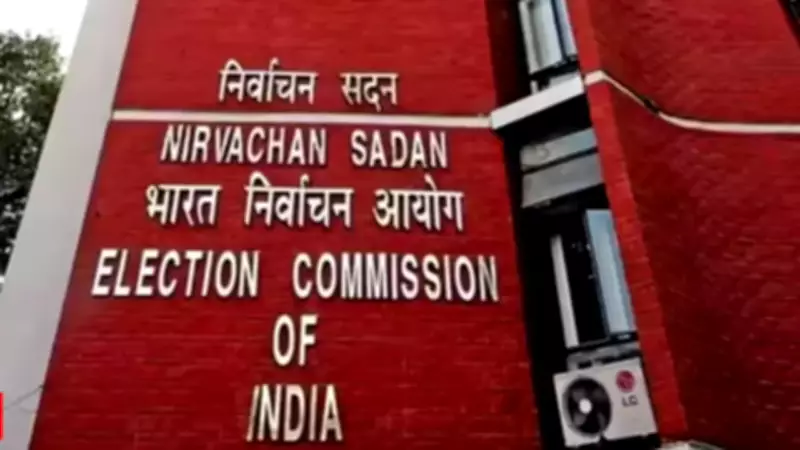
The Election Commission of India issued a directive on Thursday, calling upon 22 states and Union Territories, including Delhi, to finalize all preparatory tasks associated with the Special Intensive Revision (SIR) of electoral rolls at the earliest possible opportunity. This urgent request comes as the comprehensive exercise is anticipated to commence from the month of April.
Nationwide Coverage and Historical Context
Once this phase of the SIR is successfully concluded, it will ensure that all states and Union Territories across the country are encompassed within the revision framework. In official correspondence dispatched to the chief electoral officers of Andhra Pradesh, Arunachal Pradesh, Chandigarh, Dadra and Nagar Haveli & Daman and Diu, Haryana, Himachal Pradesh, Jammu and Kashmir, Jharkhand, Karnataka, Ladakh, Maharashtra, Manipur, Meghalaya, Mizoram, Nagaland, Delhi, Odisha, Punjab, Sikkim, Tripura, Telangana, and Uttarakhand, the poll authority reiterated that the pan-India SIR of voters' lists was originally mandated in June of the previous year.
Political Backdrop and Previous Exercises
Amidst allegations of "vote chori" or electoral theft leveled by the opposition Congress party, the Election Commission has already conducted the Special Intensive Revision of electoral rolls in 13 states and Union Territories, alongside a distinct 'special revision' in Assam earlier this year. The commission is now poised to initiate a comparable exercise in the remaining 22 states and Union Territories throughout this year.

While the SIR process, which has consistently kept the Election Commission in the public eye, has been fully completed in Bihar, it remains actively ongoing in 12 other states and Union Territories, impacting nearly 60 crore electors. The forthcoming phase will cover the remaining 40 crore electors spread across these 17 states and five Union Territories. Notably, in Assam, a 'special revision' was finalized on February 10, serving as an alternative to the standard SIR procedure.
Scheduling Challenges and Legal Hurdles
Due to a multitude of factors, the scheduling for the Special Intensive Revision in nine states and three Union Territories has experienced frequent adjustments and modifications. Mirroring the situation in Bihar, various political parties have approached the Supreme Court of India to legally challenge the implementation of SIR in Tamil Nadu and West Bengal.
Recently, Trinamool Congress president and West Bengal Chief Minister Mamata Banerjee personally presented her case before a bench led by the Chief Justice of India, vehemently opposing the voter roll cleanup exercise in her state.
Controversies and Allegations
As the Election Commission was gearing up for the SIR in Bihar, its officials had previously asserted that grassroots-level functionaries had identified several individuals from neighboring countries such as Bangladesh, Nepal, and Myanmar who were potentially ineligible to be included on the voters' list. However, the poll authority ultimately did not disclose any specific numbers or concrete evidence regarding such individuals.
Opposition parties have consistently criticized these claims, labeling them as a strategic ploy by the Election Commission to utilize the SIR as a mechanism to target electors who are not aligned with the Bharatiya Janata Party and its political allies. This has added a layer of political tension to the administrative process of electoral roll revision.