Ex-Army Chief AK Bhatt Exposes Hidden Battlefront in Kashmir Conflict
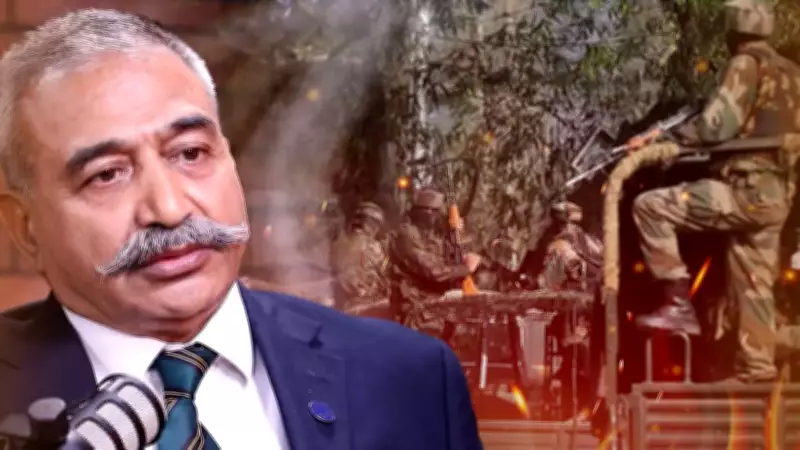
In a revealing testimony that pulls back the curtain on Kashmir's complex security landscape, former Director General of Military Operations (DGMO) Lt Gen AK Bhatt has identified what he terms "white collar terrorism" as the most significant challenge confronting the Indian Army in the region. His insights, shared during an exclusive interview on TOI's Line of Defence podcast, illuminate the murky ethical terrain where counterterror operations unfold.
The Unseen Enemy: Educated Instigators in Civilian Garb
Bhatt's analysis shifts focus from conventional armed militants to a more insidious threat: educated, well-dressed individuals who manipulate crowds and vanish before consequences unfold. "The real enemy is not always the one carrying weapons," Bhatt emphasized, describing how these instigators exploit civilian populations as human shields while orchestrating violence from the shadows.
This sophisticated form of agitation represents a paradigm shift in asymmetric warfare, where psychological manipulation and crowd control become weapons as potent as firearms. The former DGMO warned that this "white collar terrorism" complicates military responses exponentially, as traditional rules of engagement become inadequate against adversaries who operate within legal and social gray areas.

A Tragic Incident That Illustrates the Dilemma
Bhatt recounted a harrowing incident that encapsulates the impossible choices soldiers face. An army team found itself surrounded by a violent mob in Kashmir, with civilians deliberately positioned at the front as human shields. With firing restricted due to the presence of non-combatants, soldiers attempted a warning shot as a last resort.
The desperate measure tragically resulted in the death of a nine-year-old boy—a heartbreaking outcome that Bhatt refused to attribute to individual error. Instead, he took full responsibility for the decision, refusing to scapegoat the officer on the ground. "These decisions are never black and white," Bhatt explained, highlighting how commanders must weigh immediate threats against potential collateral damage in split-second calculations.
The Triple Cost: Ethical, Operational and Human
The former military leader's account lays bare what he describes as the triple burden of counterterror operations in civilian areas:
- Ethical Costs: Soldiers must navigate moral dilemmas where every action risks civilian harm
- Operational Costs: Traditional military tactics become ineffective against adversaries using human shields
- Human Costs: Both military personnel and civilians pay the price in trauma and lives lost
Bhatt's testimony underscores how Kashmir's conflict has evolved beyond conventional insurgency into a hybrid warfare scenario where information operations, psychological manipulation, and legal warfare complement traditional militant tactics. The educated instigators he describes leverage social media, legal loopholes, and crowd psychology to create situations where military responses inevitably draw criticism regardless of their necessity.
Leadership Lessons from the Frontlines
The former DGMO's decision to assume responsibility for the tragic incident involving the child's death offers a powerful lesson in military leadership. In an era where accountability often gets diffused through chains of command, Bhatt's willingness to own difficult decisions sets a precedent for how senior officers should approach the moral complexities of counterinsurgency operations.
His analysis suggests that addressing "white collar terrorism" requires more than military solutions—it demands coordinated efforts across legal, social, and informational domains to counter sophisticated agitation tactics that exploit Kashmir's complex social fabric.

As India continues to navigate security challenges in the region, Bhatt's warnings about this evolving threat landscape provide crucial insights for policymakers and military strategists alike. The battle for Kashmir, according to this seasoned military veteran, is increasingly being fought not just in mountain passes and urban alleyways, but in the minds of civilians manipulated by educated provocateurs who understand how to turn protection of non-combatants into a tactical vulnerability.