Farmers Stage Highway Blockade in Jind Against New Wheat Procurement Norms
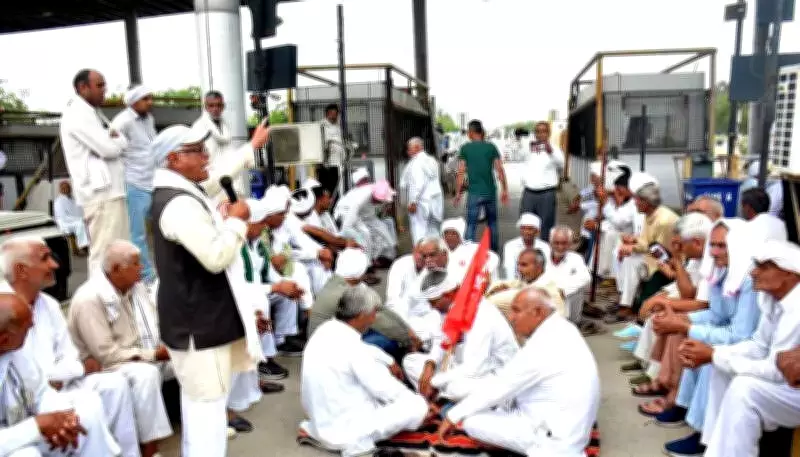
In a significant demonstration of dissent, farmers in Jind, Haryana, brought traffic to a standstill on the crucial Delhi-Patiala national highway this Saturday. The protest, centered near Tarkha Kothi village, was a direct response to what farmers are calling "burdensome" new wheat procurement rules implemented by the government.
Four-Hour Roadblock Disrupts Traffic Flow
The blockade commenced at 11 AM and continued until 3 PM, with protesters effectively shutting down the highway. Long queues of vehicles formed on both sides as traffic was diverted through alternative routes like Safa Kheri and Dumarkha. A substantial police presence was maintained at the protest site to manage the situation and ensure security.
Throughout the demonstration, farmers raised slogans against the government, expressing their frustration with the newly introduced procurement procedures. The protest was described as symbolic but powerful, highlighting the growing discontent within the agricultural community.

Core Grievances: Biometric Verification and Registration Requirements
At the heart of the protest are several mandatory requirements that farmers argue are creating unnecessary complications during the wheat selling season. Balbir Singh, the state president of the All India Kisan Sabha, outlined the key issues:
- Mandatory registration plates on tractors and the requirement for valid driving licenses
- Biometric verification including fingerprinting and photograph uploads to government portals
- The necessity for the registered farmer to be physically present during procurement
- Concerns about tractor and trolley number registration, particularly problematic as farmers often share trolleys during harvest
"These rules were presented as farmer-friendly, but in reality, they're creating significant difficulties," Singh stated. "The government claims these measures benefit farmers, yet no farmer was consulted during their formulation."
Gate Pass Timelines and Internet Reliability Concerns
Another major point of contention involves the gate pass issuance process. Initially, authorities had set a 14-hour window for gate pass distribution. Following earlier protests, this was extended to 24 hours, but farmers still find the system cumbersome.
Surajbhan Ghaso, former president of Daran Khap, raised additional concerns about frequent internet shutdowns disrupting the digital verification process. "When internet connectivity is unreliable, how can we depend on biometric systems?" he questioned.
Ghaso emphasized that farmer details are already registered through crop registration, making additional biometric verification redundant. He demanded a return to the previously existing procurement system that functioned without these additional layers of bureaucracy.
Economic Implications and Broader Support
Seema Baddowala, another protester, highlighted the economic significance of wheat for farming families. "Wheat represents the primary source of savings for most farmers," she explained. "When procurement becomes this complicated, it directly impacts our livelihoods and financial security."
The protest garnered support from various quarters, with multiple khaps and farmer organizations joining the demonstration. This collective action underscores the widespread nature of the discontent regarding the new procurement framework.
Farmers argue that the additional requirements are delaying the selling process in mandis, preventing them from returning to their fields promptly. They maintain that the previous system, based on crop registration alone, was more efficient and farmer-friendly.
The Jind highway blockade serves as a clear message to authorities: farmers demand the immediate withdrawal of what they perceive as impractical procurement rules that hinder rather than help the agricultural community during the crucial wheat selling season.