

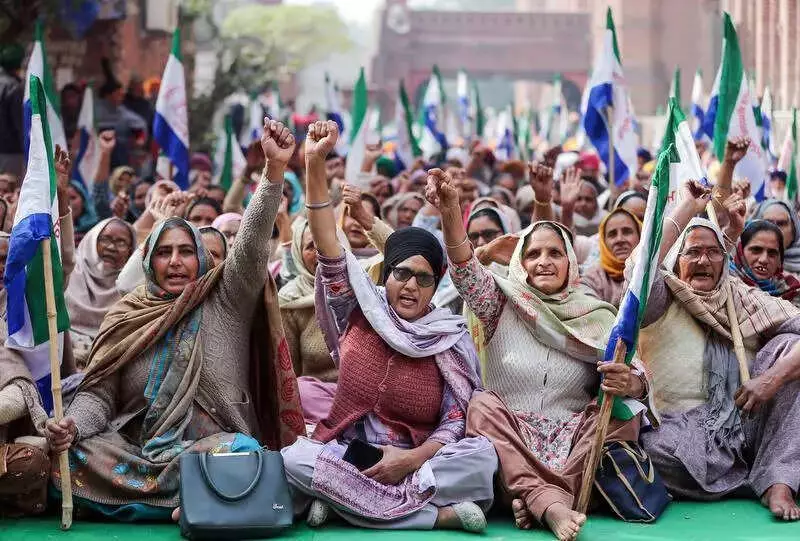
The Sanyukt Kisan Morcha (SKM) has launched a scathing attack on the central government for introducing the Viksit Bharat Guarantee for Rozgar and Aajeevika Mission (Gramin) Bill, intended to replace the landmark Mahatma Gandhi National Rural Employment Guarantee Act (MGNREGA). In a strongly-worded release issued on Thursday, the farmers' coalition labeled the new legislation as a "retrograde" move that strips rural workers and peasant households of their statutory right to employment.
A Direct Assault on Statutory Rights
The SKM asserted that the VB-GRAMG Bill fundamentally betrays the rural populace. MGNREGA ensured a legal guarantee of work for any adult willing to do manual labor, a right the new bill allegedly dismantles. The Morcha stated this shift is unacceptable. Instead of repealing MGNREGA, the SKM demanded that the Union government enact a similar law to tackle the severe problem of urban unemployment, thereby making employment a statutory right for all citizens.
In solidarity with agricultural and MGNREGS workers' unions, the SKM has extended its support for observing December 19 as a nationwide protest action day. It has called upon farmers and supporters to burn copies of the VB-GRAMG Bill, wear protest badges, and organize demonstrations at village and block levels across the country.

Broader Implications for Federalism and Development
The farmers' body also connected the bill to larger issues of fiscal federalism and development priorities. It urged political parties to demand a restructuring of financial resource sharing, advocating for states to receive 60% of the divisible tax pool, up from the current 31%. Furthermore, it called for amending the GST law to reinstate taxation powers to the states.
The SKM emphasized that MGNREGA was not merely a job scheme but a demand-driven program for creating rural infrastructure. It was designed to build assets related to roads, irrigation, drinking water, animal husbandry, and agro-processing. The Morcha accused the government of converting this people-centric model into a corporate-friendly, investment-driven program that ignores the development needs voiced by village panchayats.
Vulnerable Groups and a Call to Action
The statement highlighted the disproportionate impact this policy change would have on marginalized communities. Women, who form a large section of MGNREGA workers, would face a massive assault on their livelihoods and economic independence. Similarly, the rights and employment opportunities for Dalit and Adivasi communities would be severely compromised. The role of local self-governance institutions would also be weakened, the SKM warned.
The coalition issued a rallying cry to workers, farmers, youth, students, women, Dalits, and Adivasis to unite in defense of MGNREGA. Its demands include amending the existing act to provide 200 days of work annually at a minimum wage of not less than Rs 700 per day. It also seeks to link the scheme directly with agriculture and allied sectors to address the agrarian crisis, rural indebtedness, distress migration, and farmer suicides.
The SKM positioned the VB-GRAMG Bill as part of a broader pattern of legislation, including the Seeds Bill, Electricity Bill, and the four Labour Codes, which it claims are designed to undermine fiscal federalism and make state governments subservient to the Centre. It argued that state governments, already strained by the GST structure, cannot bear 40% of the employment scheme's cost, potentially running into thousands of crores of rupees.






