

Farmers' Union Confronts Agriculture Minister Over Controversial Seeds Legislation
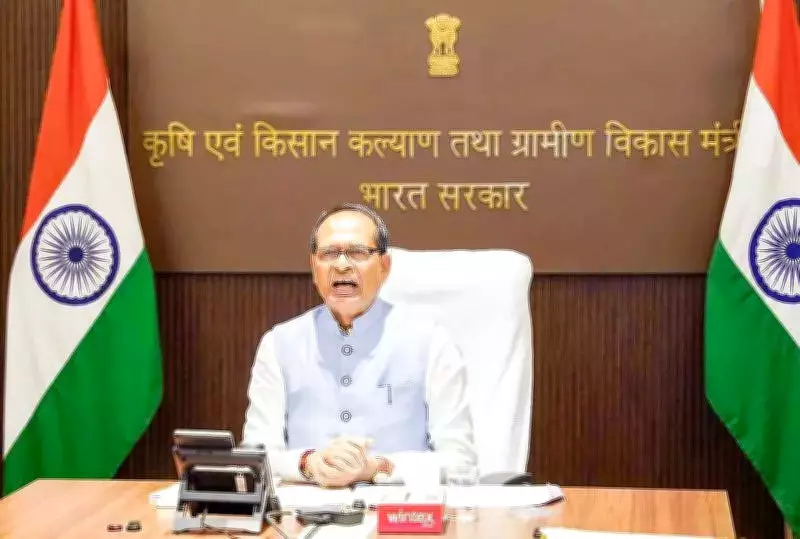
The Sanyukt Kisan Morcha has launched a pointed critique against Union Agriculture Minister Shivraj Singh Chouhan regarding the proposed Seeds Bill 2025. The prominent farm organization asserts that the legislation is designed primarily to benefit large multinational corporations, potentially at the expense of India's agricultural sovereignty and its vast community of small-scale farmers.
Questioning Federal Overreach and Lack of Consultation
In a detailed challenge comprising ten key arguments, the farmers' body has raised fundamental concerns about the bill's very foundation. A primary contention is the perceived overreach of the Union government into agriculture, which is constitutionally a state subject. The Morcha questions why the central government proceeded to draft this significant legislation without engaging in substantive consultations with state governments, whose jurisdictions and agricultural landscapes vary widely.
"Farmers currently possess the legal right to produce, preserve, exchange, and transfer seeds amongst themselves," emphasized a farmer leader representing the group. "The Seed Bill 2025 fundamentally violates this right by mandating that small, traditional seed producers register under the same stringent requirements as large corporate seed companies. This creates an uneven playing field that disadvantages local producers."

Threats to Seed Sovereignty and Unregulated Corporate Entry
The critique delves into ecological and economic dangers. The leader highlighted India's diverse 15 agro-climatic zones, each with unique soil compositions and monsoon patterns. Introducing foreign-tested seeds, including genetically modified (GM) varieties, risks contaminating indigenous seed stocks, thereby endangering the nation's seed sovereignty—a critical component of food security.
The bill is accused of facilitating the unchecked entry of multinational corporations into the Indian agricultural sector. It allegedly allows these entities to bypass established regulatory bodies like the Genetic Engineering Appraisal Committee (GEAC). The Morcha contrasts this with the Seed Bill of 1966, which included provisions to restrict imports according to India's specific needs, asking why this protective framework was overturned.
Critical Omissions: Price Control, Research, and Farmer Welfare
A significant portion of the farmers' grievances centers on what the bill fails to address:
- Price Regulation: The legislation offers no mechanism to regulate the exorbitant prices of seeds, particularly for vegetables and hybrids, which are often financially inaccessible to ordinary farmers.
- Support for Public Systems: It neglects to promote farmers' cooperatives and public research institutions. Bodies like the Indian Council of Agricultural Research (ICAR) and community-led seed villages could provide affordable, high-quality seeds to smallholders but receive no bolstering support in the bill.
- Compensation for Failure: There is no mandate for accessible compensation to farmers who suffer crop failures due to spurious or low-quality seeds—a tragic and frequent cause of farmer distress and suicides, especially in regions like the cotton belt. The bill does not cover lost profits, cultivation expenses, or the costs of fresh seeds and insurance.
- Digital Divide: While insisting on QR codes for seed packaging to track provenance, the bill makes no provision to ensure universal internet access, leaving many small producers with limited connectivity at a severe disadvantage.
A Call to Halt Legislation
The Sanyukt Kisan Morcha's statement concludes with a firm ultimatum to the government. It demands that if convincing answers to these ten critical questions are not provided, the Union government must desist from enacting the Seeds Bill 2025 in Parliament. The farmers warn that proceeding would equate to surrendering Indian agriculture and the people's fundamental right to seed sovereignty to the interests of giant multinational corporations, international finance capital, and frameworks like the World Trade Organization (WTO).






