

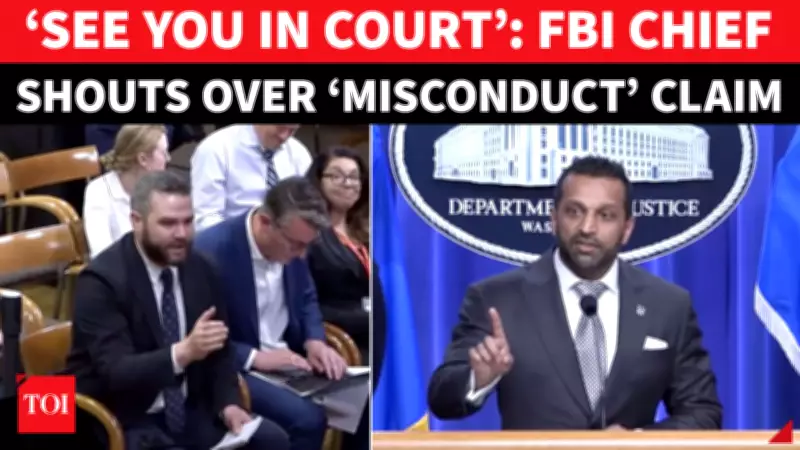
FBI Director Kash Patel Engages in Heated Exchange with Reporters Over Misconduct Claims
A dramatic confrontation unfolded at the Department of Justice as FBI Director Kash Patel and Acting Attorney General Todd Blanche vehemently rejected allegations of misconduct leveled against the top law enforcement official. The explosive report, which detailed serious concerns about Patel's alleged behavior, was met with fierce denial during a tense briefing.
Patel and Blanche Dismiss Allegations as Fabricated 'Fake News Mafia'
During the heated exchange, both Patel and Blanche categorically denied all accusations, with Patel explicitly stating, "You're lying" to reporters. The officials branded the allegations as completely fabricated, going so far as to label the media outlets responsible as part of a "fake news mafia" attempting to undermine law enforcement credibility.
The confrontation represents a significant escalation in the ongoing battle between U.S. law enforcement leadership and the press corps, with political tensions reaching new heights in Washington. The exchange was marked by raised voices and visible frustration from both government officials and journalists present.

Legal Escalation: $250 Million Defamation Lawsuit Filed
In a decisive move to counter what he claims are false allegations, FBI Director Kash Patel has initiated legal action by filing a substantial $250 million defamation lawsuit against the media organizations responsible for publishing the misconduct report. This legal maneuver signals Patel's determination to fight back against what he perceives as character assassination through media channels.
The lawsuit represents one of the largest defamation claims filed by a sitting government official against media organizations in recent memory, potentially setting a precedent for how high-ranking officials respond to critical reporting about their conduct and behavior while in office.
Deepening Standoff Between Law Enforcement and Media
This clash highlights the increasingly strained relationship between top U.S. law enforcement agencies and the press corps that covers them. The confrontation at the Department of Justice briefing room has become emblematic of broader tensions that have been building for years, particularly during politically charged periods in Washington.
Observers note that such public confrontations between senior government officials and journalists have become more frequent and intense in recent years, reflecting the polarized political climate and differing perspectives on media's role in holding power accountable versus what officials sometimes characterize as irresponsible reporting.
Political Implications and Washington Fallout
The incident has immediate political ramifications in Washington, where relationships between law enforcement agencies, the media, and political factions remain delicate. The public nature of the confrontation ensures that this will become a talking point across political circles, with potential implications for public trust in both law enforcement institutions and media organizations.
As the $250 million defamation lawsuit progresses through the legal system, it will likely continue to generate headlines and debate about the boundaries between legitimate investigative journalism and what government officials consider defamatory reporting. The outcome could influence how future administrations and agencies interact with the press corps covering their activities and decisions.






