

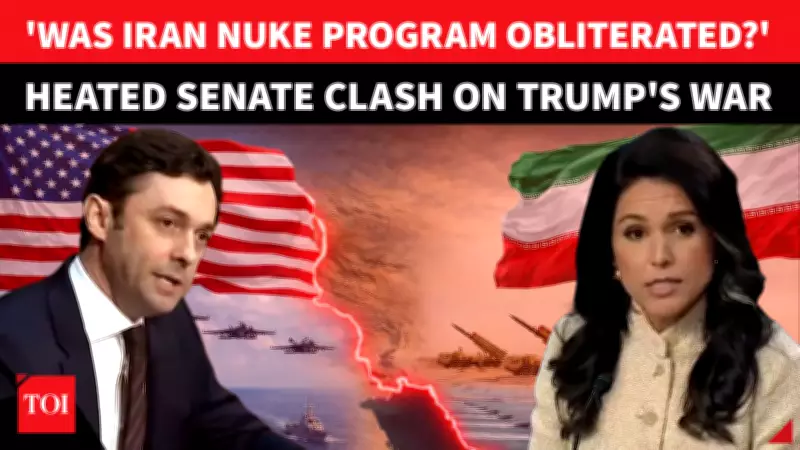
Tense Intelligence Hearing: Gabbard Deflects Iran Nuclear Threat Questions, Frustrates Senator Ossoff
A dramatic and tense exchange unfolded during a Senate intelligence committee hearing as Director of National Intelligence Tulsi Gabbard repeatedly deflected pointed questions from Senator Jon Ossoff regarding whether Iran poses an imminent nuclear threat. The confrontation, which occurred on March 19, 2026, highlighted growing scrutiny over intelligence assessments and their role in justifying ongoing military conflicts in the Middle East.
Ossoff Presses for Clarity on White House Claims
Senator Jon Ossoff, known for his rigorous questioning style, directly challenged Gabbard on the intelligence basis behind earlier White House assertions that Iran represented an immediate nuclear danger. Ossoff demanded specific evidence and data to support these claims, which have been used to bolster military actions and policy decisions. "The American people deserve transparency on what intelligence actually shows," Ossoff stated during the hearing, emphasizing the need for accountability in national security matters.
Gabbard's Deflection Strategy and Trump-Era References
In response, Director Gabbard appeared to sidestep the direct inquiry, instead referencing broader policy decisions and frameworks established during the administration of former President Donald Trump. She argued that the question of Iran's nuclear capabilities cannot be isolated from historical context and ongoing strategic considerations. Gabbard's repeated deflections frustrated Ossoff, who accused her of avoiding a straightforward answer to a critical national security issue. This back-and-forth underscored the political tensions surrounding intelligence interpretation and its use in foreign policy.

Broader Implications for Intelligence Scrutiny and Conflict Justification
The heated exchange is part of a larger pattern of increasing congressional scrutiny over how intelligence assessments are formulated and presented to justify military engagements. Key points from the hearing include:
- Questions about the reliability and timeliness of intelligence on Iran's nuclear program.
- Debates over the role of intelligence in shaping public perception and policy decisions.
- Concerns that deflections like Gabbard's may obscure factual basis for conflicts, potentially impacting diplomatic and military strategies.
This incident comes amid a backdrop of escalating violence in the region, with recent reports of missile attacks and casualties further complicating the intelligence landscape. The hearing has sparked calls for greater oversight and clarity in how intelligence agencies communicate threats to lawmakers and the public.






