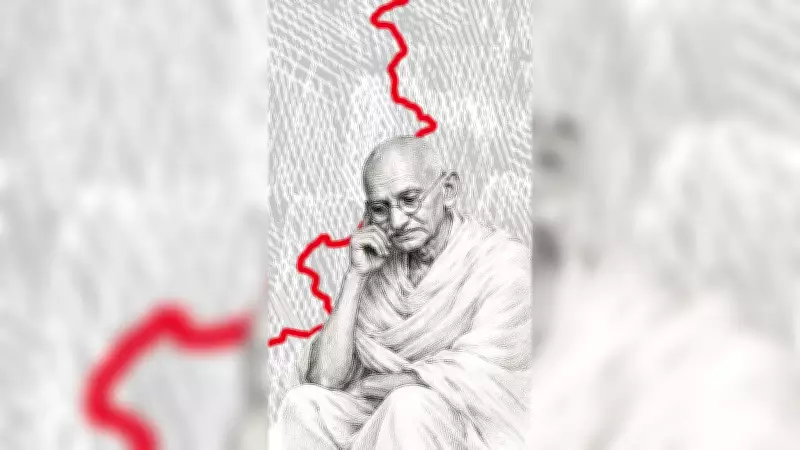
In a thought-provoking analysis, Ram Madhav delves into the complex final days of Mahatma Gandhi, highlighting a profound dilemma that the iconic leader could not resolve. This piece reflects on Gandhi's inspirations from Buddha and Jesus for his peace principles, and how their unnatural deaths mirror the tragic end of Gandhi's life, offering a unique perspective on historical events.
The Tragic End and Its Prelude
On January 30, 1948, Nathuram Godse assassinated M.K. Gandhi, accusing him of treachery for consenting to India's Partition. Godse argued that had Gandhi sincerely opposed Pakistan, neither M.A. Jinnah nor the British could have created it. While Godse's act of killing Gandhi is universally condemned, his reasons for doing so spark deeper inquiry into Gandhi's role and decisions during this tumultuous period.
Inspirations and Parallels with Historical Figures
Gandhi drew significant inspiration from Buddha and Jesus, both of whom met unnatural deaths. Buddha accepted death by consuming contaminated food to avoid offending his host, Cunda, while Jesus accepted death due to misunderstanding by rulers. In Gandhi's case, the reasons appear to blend both elements, as he navigated political pressures and personal convictions.

Gandhi's Struggle Against Partition
Gandhi never desired India's Partition, yet in June 1947, he defended his colleagues who accepted it as a fait accompli. His efforts to convince Jinnah to abandon the demand for Partition in 1945 failed. When the Cabinet Mission proposed dividing India on communal lines in 1946, Gandhi opposed it, but the Congress leadership, including Nehru, Patel, and Azad, accepted the plan for the transfer of power.
Dejected, Gandhi left a meeting, stating, "I admit defeat. I shall now leave with your permission. You should follow the dictates of your reason." Unlike previous occasions, leaders did not urge him to stay, marking a pivotal moment in his influence.
Mountbatten's Proposal and Gandhi's Desperate Moves
Upon learning of Viceroy Mountbatten's Partition proposal in March 1947, Gandhi hoped Congress would reject it after consulting him, but they did not. The Congress Working Committee demanded Punjab's partition on communal lines, with similar principles suggested for Bengal by J.B. Kriplani. Gandhi protested in letters to Nehru and Patel, receiving a terse reply that decisions were made after deep deliberation.
In a desperate final attempt, Gandhi met Mountbatten on March 31, proposing power transfer to Jinnah for all of India. This was opposed by Nehru and Patel and dismissed by Jinnah as a trick. The June 3rd Plan was later announced after leaders agreed, solidifying Partition.
The Dilemma and Its Aftermath
Gandhi faced a dilemma similar to Buddha's, unable to publicly disown his junior colleagues' decision despite opposition, blaming "circumstances." He argued that sometimes unpalatable decisions had to be taken, with good emerging from evil. While Gandhi cannot be fully absolved for creating these circumstances, holding him singularly responsible, as Godse did, is contested by history.
Godse believed Indian politics would improve without Gandhi, but India evolved into a vibrant polity through Gandhi's enduring presence, not his absence. This analysis underscores the nuanced legacy of Gandhi's final days and the unresolved conflicts that shaped modern India.