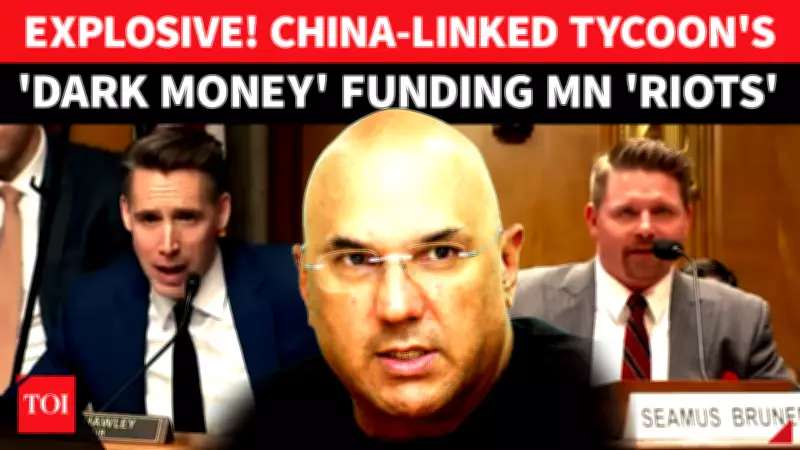
Senator Hawley Demands DOJ Probe into 'Dark Money' Networks
In a significant Senate Homeland Security Committee hearing, Senator Josh Hawley has called for the Department of Justice to launch a thorough investigation and consider potential prosecutions against what he labeled as "dark money" networks operating within the United States. Hawley specifically highlighted networks associated with billionaire figures George Soros and Neville Roy Singham, urging federal authorities to scrutinize their funding mechanisms and operational activities.
Focus on Soros and Singham-Linked Networks
During the hearing, Hawley emphasized the need for greater transparency and accountability in political financing and advocacy efforts. He argued that these networks, often shrouded in secrecy, could be influencing domestic affairs without proper oversight. The senator's remarks come amid growing concerns about the role of undisclosed funds in shaping political and social movements across the country.
Hawley's call to action underscores a broader push for reforms in campaign finance and nonprofit regulations. He stressed that without clear disclosure requirements, such networks might evade public scrutiny, potentially undermining democratic processes. The hearing also touched on related issues, though Hawley's primary focus remained on the alleged activities of Soros and Singham-affiliated groups.

Implications for Political Transparency
The senator's statements have sparked discussions about the effectiveness of current laws governing political donations and advocacy. Hawley urged the DOJ to not only investigate but also take legal action if any wrongdoing is uncovered. This move aligns with ongoing debates in Congress about tightening rules around "dark money" to ensure that all political contributions are transparent and accountable to the public.
As the investigation unfolds, stakeholders from various sectors are watching closely. The outcome could set precedents for how similar cases are handled in the future, impacting the landscape of political funding in the United States. Hawley's proactive stance highlights the increasing bipartisan concern over hidden financial influences in American politics.