

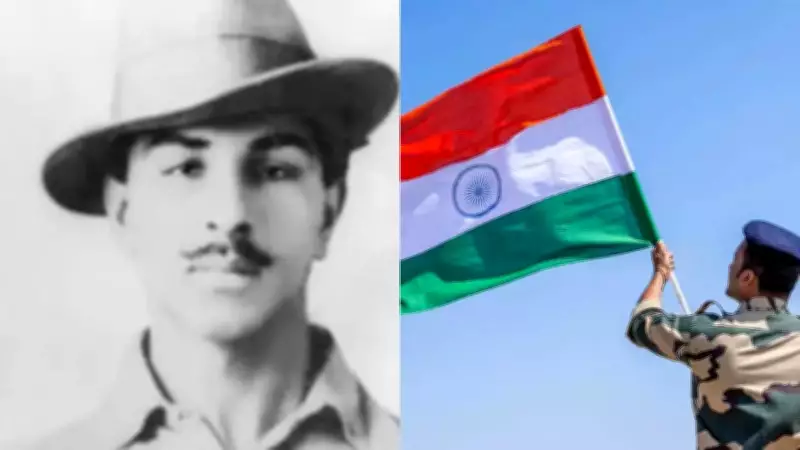
India's Enduring Tribute to Fallen Heroes and Martyrs' Day Significance
In India's collective consciousness, a soldier killed in the line of duty is not merely viewed as a casualty of war but is revered as a martyr, a 'shaheed' whose sacrifice becomes an integral part of the nation's identity. This profound respect is deeply embedded in the country's cultural and patriotic ethos, shaping how India remembers and honors those who have given their lives for the nation.
Martyrs' Day: A Legacy of Courage and Sacrifice
On Martyrs' Day, observed annually on March 23, India solemnly remembers the ultimate sacrifice of Bhagat Singh, Sukhdev Thapar, and Shivaram Rajguru, who were executed by the British colonial authorities in 1931. Their legacy continues to resonate through the sacrifices of soldiers serving the country today, making Martyrs' Day a pivotal opportunity to understand how India honors acts of bravery and selflessness.
Over time, India has meticulously built a comprehensive system to honor its fallen soldiers, combining official ceremonies, robust support for families, and enduring public memory. From the Amar Chakra at the National War Memorial to pensions and education schemes that reach families in remote areas, India strives to ensure that no soldier who dies for the nation is ever forgotten.

Solemn Ceremonies and Community Tributes
The most poignant event in this honoring process is the arrival of a martyr's body in their hometown. The coffin, often draped in the national flag, is escorted by a guard of honor, with local politicians, police, and civil society leaders in attendance. In many instances, the local community organizes processions and brief ceremonies, demonstrating that the martyr belongs not just to their regiment but also to the village, town, and the entire nation.
Gallantry Awards: Recognizing Valor
India's gallantry awards stand among the highest honors bestowed upon members of the armed forces and, in some cases, civilians. Recipients' families are invited to formal ceremonies, frequently held at Rashtrapati Bhavan, where medals are presented and the stories of soldiers' valor are narrated.
- Param Vir Chakra: The highest wartime award, given for "most conspicuous bravery" in the presence of the enemy.
- Maha Vir Chakra and Vir Chakra: Recognize acts of gallantry during military operations.
- Peacetime Awards: Include the Ashoka Chakra, Kirti Chakra, and Shaurya Chakra for bravery in counter-insurgency operations and rescue missions.
These awards are announced on Republic Day and Independence Day, ensuring national recognition for acts of courage.
National War Memorial: A Central Place of Remembrance
The National War Memorial in New Delhi serves as a central place of remembrance for soldiers who have died in service since independence. At its heart lies an eternal flame called the Amar Chakra (Circle of Immortality). Before this memorial, the Amar Jawan Jyoti at India Gate was the primary site for paying tribute, especially to those who perished in the 1971 war.
Surrounding the Amar Chakra, concentric "walls of honor" are inscribed with the names of over 26,000 soldiers. Each slab symbolizes the ancient war formation of a 'Chakravyuh', with every soldier's name etched in granite to signify permanence and dignity.
Every evening, a Retreat Ceremony is held at the National War Memorial, where the national flag and the flags of the Army, Navy, and Air Force are lowered before sunset as the Last Post is sounded. On Sundays and special occasions, a Change-of-Guard ceremony, accompanied by military band displays, attracts schoolchildren, tourists, and veterans. Wreath-laying ceremonies by the Prime Minister and senior officials occur here on important national occasions, reflecting India's effort to create a permanent space to honor its fallen soldiers.

Support to Families: A Moral Responsibility
Beyond memorials, India honors its soldiers through a strong welfare and support system for their families, serving as both a moral responsibility and a form of social security. Families of martyrs receive central ex gratia payments and pension schemes that provide long-term financial support. Pensions for war-bereaved families are typically set at 100% of the soldier's last drawn basic pay, aiding widows and children in maintaining financial stability.
Additional support includes education allowances covering tuition and hostel fees for children, cashless medical care under the Ex-Servicemen Contributory Health Scheme (ECHS), and benefits related to housing and small business support. Some state and central schemes also offer financial assistance for the marriage of daughters or remarriage of widows, along with interest subsidies on home loans to help families rebuild their lives. Employment support is another key measure, with the government reserving certain jobs for the next of kin of fallen soldiers.
Martyrs' Day: Remembering Bhagat Singh, Sukhdev, and Rajguru
On March 23, 1931, three young revolutionaries—Bhagat Singh, Sukhdev Thapar, and Shivaram Rajguru—were executed, becoming enduring symbols of courage and defiance against British colonial rule. They had been sentenced to death in the Lahore Conspiracy Case. The spark for their action ignited after the brutal death of Lala Lajpat Rai, who died from injuries sustained during a protest against the Simon Commission on November 17, 1928.
Outraged, Bhagat Singh, Rajguru, Sukhdev, and Chandra Shekhar Azad plotted to avenge Rai's death. In a case of mistaken identity, they shot another officer, Saunders. Initially, the British were unaware of the culprits, but a handwritten poster by Bhagat Singh explaining the motive linked him and his comrades to Saunders' death. Later, Bhagat Singh's dramatic protest in the Central Legislative Assembly on April 8, 1929, where he threw a bomb against two oppressive bills, brought him to the authorities' attention.
Even facing execution, the three showed no fear. They walked to the gallows at Lahore Central Jail with pride, shouting "Inquilab zindabad." Bhagat Singh famously sang "Mera Rang De Basanti Chola," turning his death into a celebration of freedom rather than despair. Despite appeals for clemency and widespread public support, they were executed, leaving a lasting legacy. Today, Martyrs' Day pays tribute to their bravery, self-sacrifice, and patriotism, inspiring generations of Indians.
Martyrs' Day, therefore, serves as a powerful reminder of the cost of freedom and the responsibility of every citizen. It honors those who fought for the nation and inspires people to uphold the values of courage, commitment, and selflessness.





