

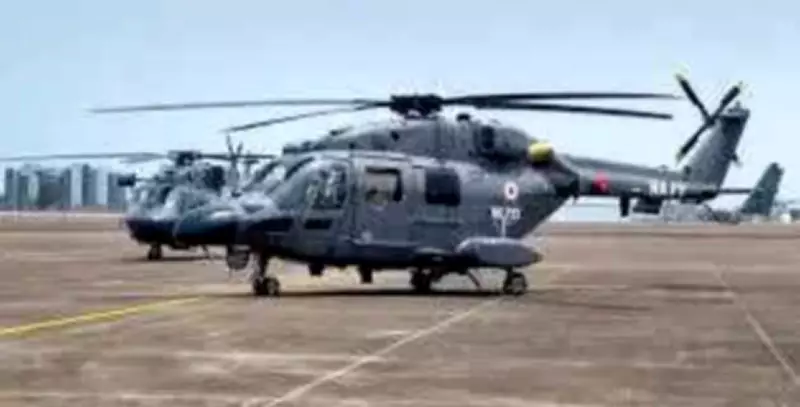
Indian Air Force Pioneers Indigenous Helicopter-Dropped Drone Project
In a significant advancement for India's defense capabilities, the Indian Air Force (IAF) has commenced work on the nation's first indigenous helicopter-dropped drone project, named 'Vayu Baan' (air arrow). This initiative comes at a time when drones are increasingly dominating modern warfare scenarios globally, highlighting the strategic importance of unmanned aerial systems in contemporary conflicts.
What is the Vayu Baan Drone System?
Vayu Baan represents a groundbreaking air-launched effects (ALE) program, meticulously designed to seamlessly integrate unmanned aerial systems with manned rotary-wing platforms. This innovative drone is engineered to be deployed from a moving helicopter during flight, marking a leap forward in tactical flexibility and operational efficiency.
Once released from the helicopter, the drone autonomously unfolds its wings, activates its propulsion system, and transitions into an operational mode. It can function as either a sophisticated surveillance asset, providing critical real-time intelligence, or as a precision-guided munition, commonly referred to as a kamikaze drone, capable of executing targeted strikes with high accuracy.

Development and Technical Specifications
The homegrown project is being spearheaded by the IAF's Directorate of Aerospace Design (DAD) based in Gandhinagar. Recently, the directorate issued a request for proposal (RFP), inviting bids from domestic vendors for the comprehensive design and development of the system. This move underscores India's commitment to fostering indigenous defense manufacturing and reducing reliance on foreign technology.
Upon achieving flight status, Vayu Baan will transmit live video feeds directly to operators, enabling immediate situational awareness. If the mission demands, it can execute precision strikes utilizing a small warhead integrated onboard. The drone is projected to boast an impressive operational range exceeding 50 kilometers and an endurance of approximately 30 minutes, ensuring extended mission capabilities.
Key features include advanced electro-optical and infrared sensors for precise target identification, coupled with the ability to operate effectively in environments where GPS signals are jammed or compromised. This resilience is crucial for maintaining operational effectiveness in contested airspace.
Operational Requirements and Timeline
The IAF has outlined a requirement for 10 drone units, complemented by two airborne control stations and two ground control stations. With an ambitious goal to fast-track the development, rigorous testing, and final delivery phases, the force aims to complete the entire process within a single year. This accelerated timeline reflects the urgency and strategic priority assigned to enhancing India's unmanned aerial capabilities.
Global Context and Strategic Implications
With the Vayu Baan project, the IAF is poised to join an elite group of nations, including the United States and China, that are actively developing and deploying air-launched unmanned systems. This advancement places India at the forefront of military innovation in the Indo-Pacific region and beyond.
The United States Army is heavily investing in ALE technologies as a core component of its future vertical lift ecosystem. Notable examples include the Area-I ALTIUS (agile-launched, tactically integrated unmanned system), which has undergone successful trials launched from MH-60 Black Hawk helicopters, demonstrating the viability and effectiveness of such systems in real-world scenarios.
Similarly, China is focusing on integrating unmanned rotary-wing aircraft with its existing helicopter fleets, such as the Z-20J, Z-10, and Z-19 models. This global trend underscores the transformative impact of drone technology on modern warfare, where flexibility, precision, and reduced risk to human personnel are paramount.

The development of Vayu Baan not only enhances India's defensive and offensive capabilities but also signifies a major step towards self-reliance in critical defense technologies. As drones continue to reshape battlefields worldwide, this indigenous project positions the Indian Air Force to effectively counter emerging threats and maintain a strategic edge in an increasingly complex security environment.





