

India Poised to Approve Historic Rafale Fighter Jet Deal Ahead of French President's Visit
In a significant strategic move, India is gearing up to approve a monumental defence procurement proposal for 114 Rafale fighter jets from France, valued at a staggering Rs 3.25 lakh crore. The Defence Acquisition Council (DAC), led by Defence Minister Rajnath Singh, is scheduled to convene in the second week of this month to grant the crucial Acceptance of Necessity (AoN) for this acquisition.
Strategic Timing and Indigenous Manufacturing Push
This high-stakes decision comes just ahead of French President Emmanuel Macron's official visit to India for the Artificial Intelligence Summit from February 18 to 20. The proposed deal represents one of India's most ambitious defence collaborations, with approximately 80% of the aircraft slated for domestic production.
The procurement plan outlines that 18 Rafale jets will be acquired in fly-away condition directly from France, while the remaining 96 aircraft will be manufactured in India through a strategic partnership. This initiative aims to achieve up to 60% indigenous content, marking a substantial leap in India's defence manufacturing capabilities under the 'Make in India' framework.

IAF's Squadron Composition and Operational Requirements
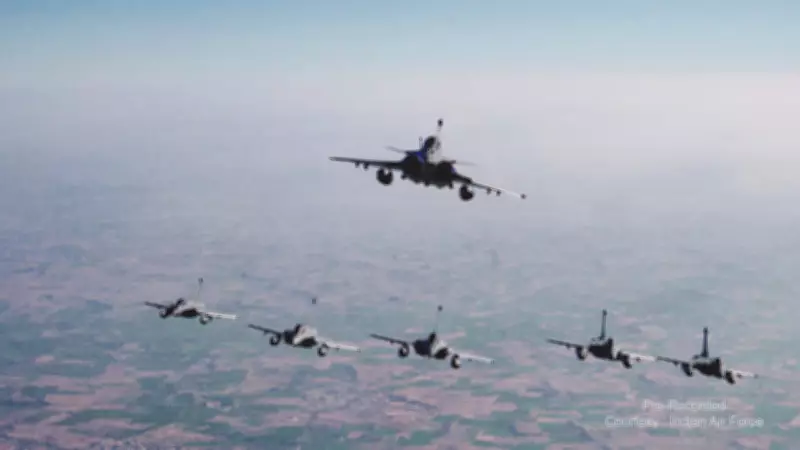
The Indian Air Force (IAF) is set to receive a formidable fleet comprising 88 single-seater and 26 twin-seater Rafale aircraft. The majority of these advanced fighters will be produced locally through collaboration between French aerospace giant Dassault Aviation and leading Indian private sector companies.
This acquisition addresses a critical operational gap, as the IAF currently operates only around 30 fighter squadrons against its sanctioned strength of 42 squadrons. The shortage has become increasingly concerning amid escalating regional security threats, particularly from Pakistan and China.
Regional Security Imperatives and Strategic Partnerships
Defence analysts have highlighted growing strategic collusion between Pakistan and China, as well as emerging security dynamics involving Bangladesh, as key factors driving India's urgent need to bolster its air combat capabilities. The Rafale acquisition is viewed as a vital countermeasure to these evolving geopolitical challenges.
Once finalized, this deal will significantly enhance India's air power, bringing the IAF's Rafale fleet to 150 aircraft. Additionally, the Indian Navy will operate 26 carrier-compatible versions of these French fighters, creating a comprehensive multi-service capability.
Operational Excellence and Future Combat Readiness
The Rafale has already demonstrated its combat prowess during Operation Sindoor, where it proved its worth as a '4.5-generation king' in offensive operations. Equipped with advanced weaponry including Meteor beyond-visual-range air-to-air missiles, SCALP cruise missiles, and precision laser-guided bombs, the Rafale represents a quantum leap in India's aerial strike capabilities.
This acquisition becomes particularly crucial given delays in India's indigenous fighter development programs. The Advanced Medium Combat Aircraft (AMCA) fifth-generation fighter project remains in the early stages of vendor selection, while Hindustan Aeronautics Limited's Tejas MkIA production faces challenges due to dependence on American GE engines.
Procurement Process and Diplomatic Significance
The Rafale deal has already cleared the Defence Procurement Board last month and now awaits final approval from the apex Defence Acquisition Council. Following this clearance, formal technical and commercial negotiations will commence, with expectations that the agreement could be finalized during President Macron's upcoming visit to India.
This defence partnership not only strengthens India's military capabilities but also reinforces the strategic relationship between India and France. The timing of the approval process, synchronized with high-level diplomatic engagements, underscores the growing importance of defence cooperation in bilateral relations.

The Rafale project is expected to provide the IAF with a 4.5-generation-plus multirole fighter capability that will serve India's defence needs for decades to come, while simultaneously boosting domestic defence manufacturing through technology transfer and industrial collaboration.





