Iran War Exposes Critical Gaps in India's Defense Strategy
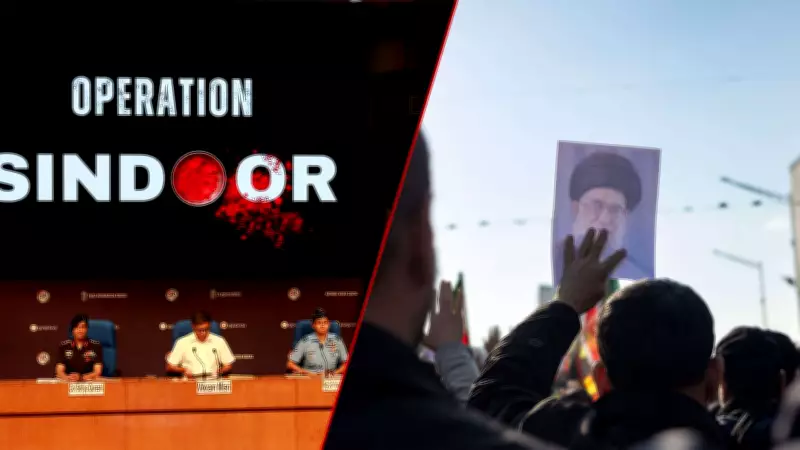
The recent US-Iran conflict has delivered a stark wake-up call to Indian defense planners, revealing fundamental vulnerabilities in the nation's military doctrine. While Operation Sindoor 2.0 demonstrated India's growing capabilities, the parallel conflict in the Middle East exposes dangerous assumptions that could leave critical infrastructure exposed in future conflicts.
The Shattered Sanctuary Myth
For decades, Indian defense strategy has operated under the assumption that manufacturing corridors and industrial complexes remain safe rear-area sanctuaries during wartime. The systematic targeting of Iran's Shiraz Electronics complex—struck thirteen times in seven days—has demolished this comforting fiction. This was not collateral damage but a deliberate campaign to dismantle Iran's industrial nervous system.
India's defense manufacturing corridors in Uttar Pradesh, Tamil Nadu, and Bengaluru are not protected rear areas but primary targets that adversaries are already war-gaming. Pakistan's Field Marshal Asim Munir publicly threatened to strike the Jamnagar refinery before Operation Sindoor, previewing the exact targeting philosophy now being validated over Iran.

Command and Control Vulnerabilities
The command-and-control dimension presents equally urgent concerns. Analysis of satellite imagery from the opening days of the US-Iran conflict revealed that seven US military bases across the Gulf lost communication and radar infrastructure in the first wave of strikes. This degradation of seeing, communicating, and coordinating capabilities occurred before kinetic battles fully commenced.
India's C4ISR (Command, Control, Communications, Computers, Intelligence, Surveillance, and Reconnaissance) nodes face similar exposure risks. The ability to maintain operational command during initial strikes could determine the outcome of future conflicts.
The Unsustainable Drone Economics
Perhaps the most alarming revelation concerns drone warfare economics. Iran's Shahed drones cost between $20,000 and $50,000 each, while the interceptors destroying them cost millions of dollars. This creates an unsustainable economic equation for defenders.
India currently lacks a cheap counter-drone kill chain at the scale this emerging threat demands. Developing cost-effective defense systems against swarming drone attacks represents one of the most pressing challenges for Indian defense planners.
Operation Sindoor's Validations and Contrasts
Against these warnings stands Operation Sindoor's compendium of validations. The operation demonstrated several strengths in India's current approach:
- Nine terror infrastructure nodes were confirmed by multi-agency intelligence before authorization of strikes
- Execution relied entirely on domestically developed or assembled systems including BrahMos missiles and loitering munitions
- Strategic restraint was exercised by refraining from targeting Pakistani air defenses early on, demonstrating escalation management
- When Pakistan's DGMO called on May 10, India accepted a halt but defined it as a conditional bilateral understanding rather than a ceasefire, preserving future freedom of action
The contrast with the United States' approach in Iran could not be more direct. Washington entered Operation Epic Fury without a defined exit strategy and remains engaged, while India entered Sindoor with clear objectives and concluded operations decisively.
The Classroom of Modern Warfare
The US-Iran war and Operation Sindoor represent two simultaneous case studies in opposite approaches to modern warfare—one serving as a compendium of warnings, the other as a compendium of validations. The classroom of contemporary conflict is open, presenting India with both cautionary tales and successful models.
The critical question is no longer whether India is watching these developments. The urgent question is whether defense planners are acting on these lessons before the next examination arrives. The vulnerabilities exposed in Iran's defense industrial ecosystem mirror potential weaknesses in India's own security architecture that require immediate attention and strategic investment.