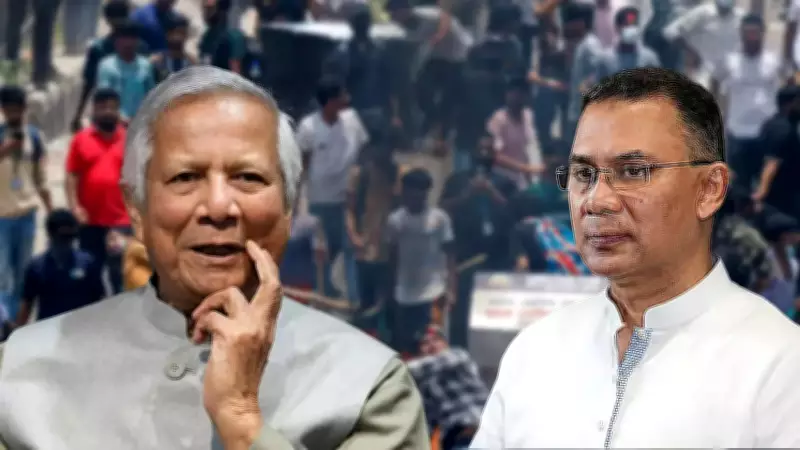
Jamaat Chief's Intervention Exposes Deepening Political Crisis in Bangladesh
Bangladesh's political landscape is experiencing significant tremors that have escalated into a full-blown power confrontation. The situation intensified dramatically after President Mohammed Shahabuddin publicly accused the interim government led by Nobel laureate Muhammad Yunus of systematically sidelining his office and violating established constitutional norms.
Unexpected Counterattack from Islamist Leader
In a surprising development, the response to the president's serious allegations did not emerge from Yunus or his administration. Instead, Jamaat-e-Islami chief Shafiqur Rahman launched a fierce counterattack, directly challenging President Shahabuddin's claims and defending the interim regime's actions.
Rahman's intervention has reignited longstanding allegations about a political understanding between Yunus and Islamist factions that reportedly took shape following the dramatic exit of former Prime Minister Sheikh Hasina on August 5, 2024. This development has brought Bangladesh's internal political dynamics into sharp focus.

Strategic Implications and Regional Concerns
The political confrontation carries significant strategic implications beyond Bangladesh's borders. The lifting of Jamaat-e-Islami's ban, the subsequent release of Islamist leaders, and emerging political alignments have raised substantial security alarms, particularly in neighboring India which closely monitors political developments in Bangladesh.
From Dhaka's internal fault lines to broader regional security considerations, this confrontation represents more than a personal feud between political figures. It reflects a deeper ideological contest over Bangladesh's future direction and governance model.
Silence from Yunus and Rising Stakes
While Jamaat-e-Islami has moved to defend the interim phase and its policies, Muhammad Yunus has maintained a notable silence regarding the president's accusations. This silence has created a political vacuum that Islamist leaders have been quick to fill, further complicating Bangladesh's political equation.
The stakes continue to rise rapidly in a nation that finds itself at a critical crossroads. The confrontation between constitutional authority represented by the president and the interim government backed by Islamist elements signals potential instability ahead.
As Bangladesh navigates this complex political terrain, the international community watches closely, particularly regional powers concerned about stability in South Asia. The outcome of this power struggle could significantly influence Bangladesh's domestic policies and international relationships for years to come.