

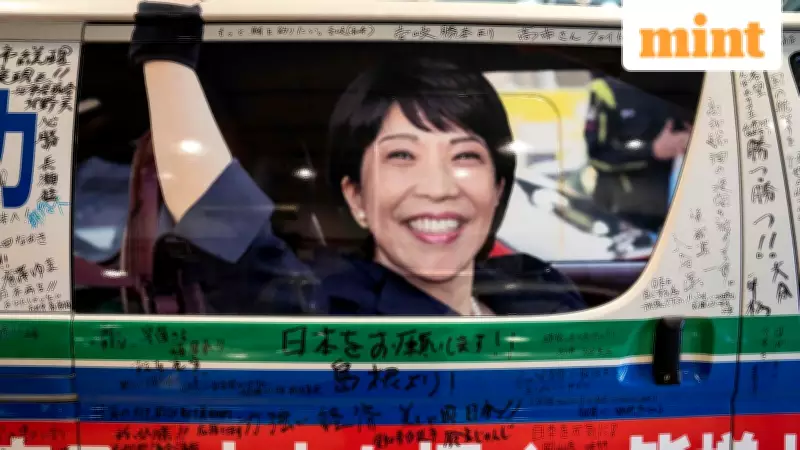
Japan's Prime Minister Sanae Takaichi Forges Strong Connection with Younger Electorate
Japanese Prime Minister Sanae Takaichi is poised for a significant electoral triumph, with recent polls indicating a surge in support from a demographic often elusive to political leaders globally: young voters. As the nation approaches a critical national vote, Takaichi's unique appeal is reshaping the political landscape.
Overwhelming Support from Youth Demographics
Surveys reveal a remarkable trend: 84% of respondents in their 20s and 78% in their 30s express backing for Prime Minister Takaichi and her cabinet. This contrasts sharply with the overall approval rating of 67%, highlighting her exceptional resonance with younger citizens. Many attribute this to her perceived status as an outsider who brings a fresh, straight-talking approach to a political arena traditionally dominated by men.
"She seems like a capable and dependable person. I feel she could be the one to change Japan," remarked Kaede Suzuki, a 32-year-old mother of three. "I think she's popular because she's different from what it's been like before."

Social Media Mastery and Policy Appeals
Takaichi has adeptly leveraged social media to connect with younger audiences, transforming typically mundane diplomatic events into viral moments. Notable instances include drumming along to K-pop hits with South Korea's President Lee Jae Myung and sharing selfies with Italy's Prime Minister Giorgia Meloni. Her X (formerly Twitter) account blends high-level diplomacy with personal musings on fashion and cooking, showcasing a relatable, multifaceted persona.
On the policy front, she has directly targeted younger voters' economic concerns through initiatives like gasoline tax cuts and pledges to enhance take-home pay via tax reforms, particularly benefiting young families with lower incomes.
A Vision for Japan's Future
A decisive victory for Takaichi and her Liberal Democratic Party (LDP) would solidify her authority and enable ambitious plans to rejuvenate Japan's economy and address stagnant wages through aggressive fiscal measures. As a security hawk, she advocates for strengthened alliances with the United States and a bolstered military to counter China's growing assertiveness in Asia.
Her firm stance on China, including contentious remarks about Taiwan that triggered economic reprisals, has paradoxically boosted her popularity. Younger voters, in particular, appreciate her willingness to address sensitive issues head-on, unlike more cautious traditional politicians.
"There aren't that many people who speak their minds so clearly in Japanese politics," observed Yuta Takahashi, a 28-year-old supporter at a rally in Saitama.
Breaking Barriers and Inspiring Change
Takaichi's journey to leadership is a story of perseverance. Rising from humble beginnings, she contrasts with the privileged backgrounds of many Japanese political figures, having pursued high office for three decades after two previous failed bids for LDP leadership. As Japan's first female prime minister, she inspires many, especially women, who hope for her success.
Tobias Harris, founder of Japan Foresight, noted, "People are inspired by what she overcame to get here. I think they are just responding to the fact that she is a different kind of leader. She seems like she is going to get stuff done."
A self-proclaimed workaholic, Takaichi vowed to "work, work, work, work" for the Japanese people upon taking office in October. Her early diplomatic efforts, including hosting former U.S. President Donald Trump, were widely viewed as successes, further cementing her image as a capable leader.
Electoral Challenges and Uncertainties
Despite the optimistic projections, potential hurdles remain. Younger voters historically exhibit lower turnout rates compared to older demographics, which could advantage opposition parties in closely contested races across 465 parliamentary seats. Additionally, some young supporters express enthusiasm for Takaichi personally but harbor reservations about the LDP, which has governed Japan for most of the postwar era.

Nonetheless, Takaichi's ability to engage a typically disengaged segment of the electorate positions her as a transformative figure in Japanese politics, with the upcoming election serving as a critical test of her widespread appeal.





