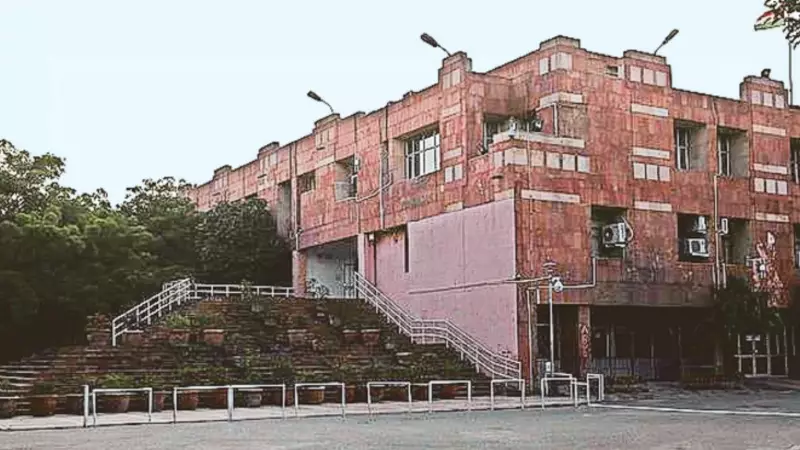
A fresh controversy has erupted at Delhi's Jawaharlal Nehru University (JNU) following a student protest where slogans were raised against Prime Minister Narendra Modi and Union Home Minister Amit Shah. The incident, which occurred on the night of Monday, January 5, 2026, has drawn sharp condemnation from the Bharatiya Janata Party (BJP), which has blamed opposition parties for encouraging such acts.
Protest Timing and Supreme Court Verdict
The protest took place just hours after a significant Supreme Court ruling. On Monday, a bench headed by Justices Aravind Kumar and comprising NV Anjaria denied bail to activists Umar Khalid and Sharjeel Imam in the 2020 Delhi riots conspiracy case. The court held that their alleged role stood on a "higher footing in the hierarchy of participation." However, the bench granted conditional bail to five other accused: Gulfisha Fatima, Meeran Haider, Shifa Ur Rehman, Mohammad Salim Khan, and Shadab Ahmad.
According to Jawaharlal Nehru University Students’ Union (JNUSU) president Aditi Mishra, students hold an annual protest to condemn the violence that rocked the campus on January 5, 2020. On that day, a masked mob stormed JNU, attacking students in three hostels with sticks, stones, and iron rods. The violence left at least 28 people injured, including then JNUSU president Aishe Ghosh, and caused extensive damage to property.
Political Reactions and Accusations
The BJP swiftly condemned the sloganeering. Delhi ministers Ashish Sood and Manjinder Singh Sirsa blamed the opposition for supporting individuals they deem anti-national. Sood linked the protest to the bail-seekers, stating, "Sharjeel Imam spoke about separating Northeast India. Umar Khalid raised slogans of 'India will be broken into pieces.'" Sirsa called the use of abusive language against the country's leaders "shameful."
Union Minister Giriraj Singh escalated the rhetoric, suggesting the protesters should be tried for treason and accusing them of having a "Pakistan mentality." He alleged, "Some people have made JNU a den of 'tukde tukde' gang. People like Rahul Gandhi, TMC, Communists are part of this gang."
In contrast, Congress leader Sandeep Dikshit defended the right to protest but criticized the language used. He stated, "Anybody has a right to protest against any court judgment. But I don't think use of derogatory words... is acceptable. The Congress has always stood for tempering our language in public discourse."
Police Stance and Ongoing Debate
Despite the high-voltage political exchange, the police have maintained a cautious stance. A senior police officer confirmed that no formal complaint had been registered in connection with the sloganeering incident as of January 6, 2026.
The JNUSU president, Aditi Mishra, clarified that the slogans were "ideological" and not personal attacks. "They were not directed at any individual," she told PTI. This annual protest continues to be a flashpoint, intertwining campus politics with national narratives around nationalism, free speech, and judicial processes.
The event underscores the deep political divisions in India, where university campuses often become battlegrounds for ideological wars. The linkage of the protest to the Supreme Court's bail denial in a high-profile riots case ensures the issue remains in the national spotlight, fueling debates on justice, dissent, and national security.