

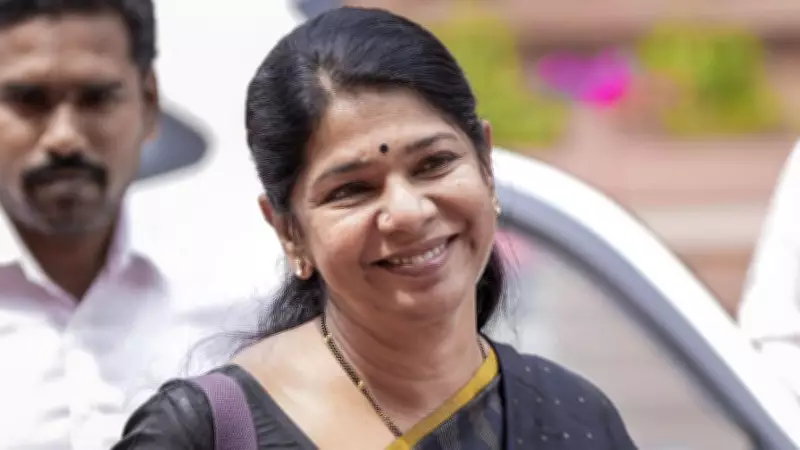
In a sharp retort during the Lok Sabha proceedings on Thursday, DMK MP Kanimozhi responded to Prime Minister Narendra Modi's remarks about opposition members wearing black attire to protest the women's reservation amendment bill. The Prime Minister had earlier in the debate quipped that the black clothing acted as a 'kala tika' to ward off the evil eye, drawing attention to the symbolic protest by DMK parliamentarians.
Kanimozhi Invokes Divine Symbolism in Defense
Kanimozhi, a prominent leader from the Dravida Munnetra Kazhagam (DMK), countered by highlighting the cultural and religious significance of the color black in Indian tradition. She pointed out that black is traditionally associated with Goddess Kali, a powerful deity in Hinduism revered for strength and protection. This rebuttal aimed to reframe the narrative from one of mere protest to one rooted in spiritual symbolism.
Context of the Parliamentary Exchange
The exchange occurred during a heated debate on the amendment to the women's reservation law, where opposition parties, including the DMK, have been vocal in their criticisms. Wearing black clothes has been a visible form of dissent against the bill, which the DMK argues does not go far enough in ensuring adequate representation for women from marginalized communities.

Prime Minister Modi's comment, made in a lighter vein, suggested that the black attire served as a protective mark against negativity, akin to a 'kala tika' used in rituals. However, Kanimozhi's response turned the focus towards the deeper connotations of the color, emphasizing its sacred rather than superstitious implications.
Political Implications and Broader Debate
This verbal sparring underscores the ongoing tensions in Indian politics, particularly around issues of gender representation and federalism. The women's reservation bill has been a contentious topic, with parties like the DMK pushing for amendments to include quotas for Other Backward Classes (OBCs) and minorities, which they claim are overlooked in the current proposal.
Kanimozhi's invocation of Goddess Kali not only served as a cultural counterpoint but also reinforced the DMK's stance on social justice and inclusivity. By linking the protest to a revered figure, she sought to legitimize the opposition's actions and appeal to a broader audience familiar with Hindu iconography.
The incident highlights how political debates in India often intertwine with religious and cultural references, adding layers of meaning to parliamentary discussions. As the debate on the women's reservation law continues, such exchanges are likely to shape public perception and political alliances in the lead-up to future elections.






