Kavitha Denounces Delhi Excise Policy Case as Political Vendetta
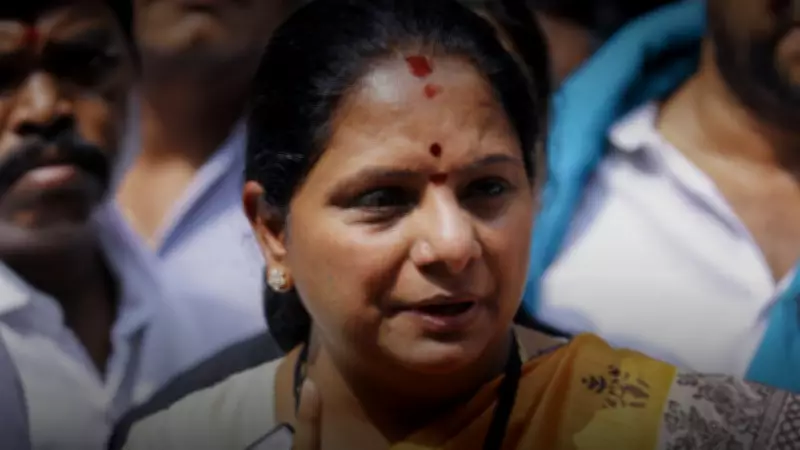
In a strong statement, Telangana Jagruthi president K Kavitha has labeled the Delhi excise policy case as "a political vendetta", marking her first public reaction since a Delhi court discharged all accused. She firmly insisted on her complete lack of involvement in the matter and accused the case of being a targeted effort to undermine the Bharat Rashtra Samithi (BRS) through character assassination.
Allegations of Targeting BRS Leadership
Kavitha emphasized that the case was not merely about legal proceedings but a calculated move to tarnish the reputation of BRS chief K Chandrashekar Rao. She argued that the allegations were fabricated to damage the political standing of the party and its leaders, suggesting a broader conspiracy aimed at weakening the BRS in the political landscape.
"This is nothing but a political vendetta," Kavitha stated, highlighting her belief that the case was orchestrated to create a negative perception of the BRS. She reiterated her innocence, asserting that she had no connection to the excise policy decisions in Delhi and that the charges were baseless.

Context of the Court Discharge
The Delhi court's decision to discharge all accused in the excise policy case has added fuel to Kavitha's claims. She pointed to this development as evidence supporting her stance that the case lacked merit from the outset. According to her, the discharge validates her position that the allegations were politically motivated rather than grounded in factual evidence.
Kavitha's remarks come amid ongoing political tensions, with the BRS facing scrutiny in various arenas. She called for a fair and impartial investigation, free from political interference, to uncover the truth behind the excise policy matter.
Implications for Telangana Politics
This controversy has significant implications for Telangana politics, where the BRS plays a pivotal role. Kavitha's allegations of vendetta could resonate with supporters and influence public opinion, potentially shaping future electoral dynamics. Her defense of the party leadership underscores the internal solidarity within the BRS as it navigates these challenges.
As the situation unfolds, observers are closely watching how this case impacts the political strategies of both the BRS and its opponents. Kavitha's vocal criticism highlights the intense rivalries and high stakes involved in Indian politics today.