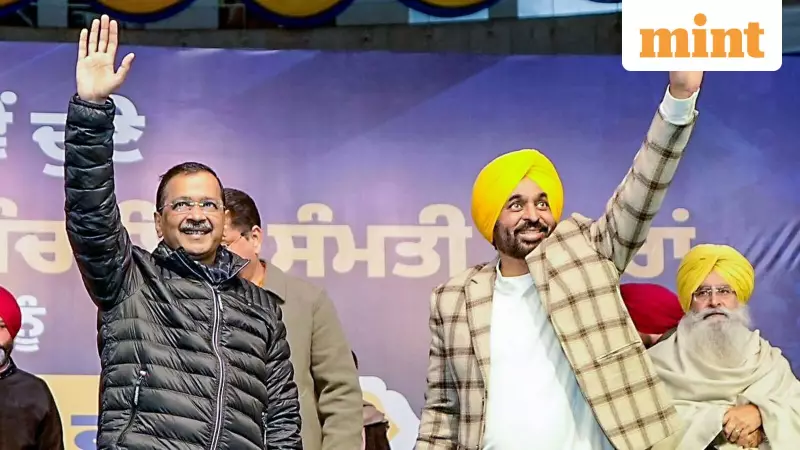
Aam Aadmi Party (AAP) national convenor Arvind Kejriwal launched a sharp critique on January 22nd against chief ministers from various Indian states who are currently attending the World Economic Forum (WEF) annual meeting in Davos, Switzerland. The former Delhi chief minister accused these leaders of treating the high-profile international summit as a leisurely 'picnic' excursion with their families, rather than a serious platform for investment promotion and state development.
Allegations of Leisure Over Work at Global Forum
While addressing a public gathering during the launch ceremony of the Mukh Mantri Sehat Bima Yojana in Punjab, Kejriwal pointedly remarked, "All their chief ministers are in Switzerland right now. The WEF is underway in Davos. All CMs are there with their families. One CM and an industrialist from the state travelled to Davos on the same flight and signed an agreement. They don't go there for work but for picnic."
Political observers suggest Kejriwal was likely referring to Maharashtra Chief Minister Devendra Fadnavis, whose administration signed a substantial ₹1 lakh crore agreement with the Mumbai-based Lodha Group on January 20th for developing data centers in India's financial capital. This significant deal was formally inked during the Davos summit proceedings.

Contrasting Governance Approaches: Foreign Travel vs. Public Welfare
Kejriwal drew a deliberate contrast between what he characterized as extravagant foreign travel by other chief ministers and the governance approach of the AAP government in Punjab under Chief Minister Bhagwant Mann. He emphasized that his administration has consciously prioritized tangible public welfare initiatives over international junkets.
"Look at their CMs going to Switzerland and here is your CM who is making a health card for you. He can also go; his wife and daughter would also wish to be in Switzerland. But he stayed here for three crore Punjabis," Kejriwal stated emphatically during his speech.
The newly launched Punjab health insurance scheme provides cashless medical treatment coverage up to ₹10 lakh annually per family, representing a substantial investment in public healthcare infrastructure within the state.
Political Sparring Over Davos Attendance Intensifies
Kejriwal's comments arrive amidst ongoing political controversy regarding the appropriateness and productivity of state leaders' participation in the annual WEF summit, where several chief ministers have actively pursued global investment opportunities for their respective regions.
The remarks strategically underscore AAP's continuing effort to position itself as a political entity fundamentally committed to practical governance and welfare delivery, while simultaneously accusing rival parties of fiscal extravagance and distorted developmental priorities.
Maharashtra's Substantial Investment Agreements
According to an official government statement, the Maharashtra administration secured an impressive 19 Memorandums of Understanding (MoUs) valued at approximately ₹14.50 lakh crore on the very first day of the World Economic Forum in Davos on January 19th. These agreements span multiple sectors and represent one of the largest investment hauls by any Indian state at the international forum.
Earlier, Amruta Fadnavis, the banker-singer wife of Chief Minister Devendra Fadnavis, responded to criticism from Shiv Sena-UBT MP Sanjay Raut, firmly asserting that the chief minister's Davos visit was strictly business-oriented rather than recreational. Raut had previously demanded public disclosure of travel expenses for leaders attending the summit and had similarly characterized the gathering as a "picnic" for Indian chief ministers.
Global Leadership Convenes in Swiss Alpine Town
The World Economic Forum's annual meeting in Davos has brought together government officials, business executives, civil society representatives, and academic leaders from across the globe from January 19th to 23rd. These forward-looking discussions aim to address pressing international challenges and establish global priorities for the coming year.

This year's Indian delegation to Davos included chief ministers from both Bharatiya Janata Party (BJP)-ruled states and opposition-governed regions such as Congress-led Telangana, highlighting the cross-political appeal of the international economic platform for investment attraction and global engagement.
Kejriwal's critique reflects broader debates within Indian politics regarding the balance between international diplomacy, economic outreach, and domestic governance priorities, particularly as states compete for both foreign investment and voter approval through contrasting political narratives.