

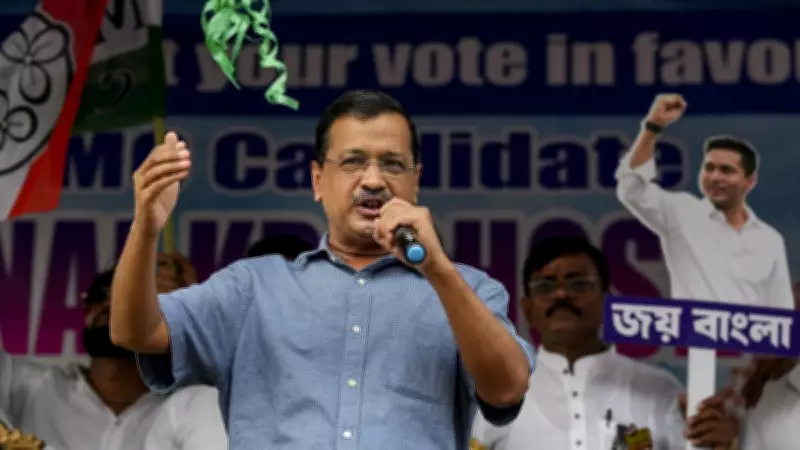
The Aam Aadmi Party (AAP), once a beacon of anti-corruption politics and grassroots activism, now faces a critical juncture. As the party navigates the complexities of governance and electoral politics, questions about its long-term sustainability and ideological coherence have become increasingly pertinent. The party, founded by Arvind Kejriwal, risks the fate of other personality-driven outfits that collapse or shrink once the founder's aura weakens.
The Rise and Current Challenges
AAP emerged from the India Against Corruption movement, capturing the imagination of millions with its promise of clean governance and citizen-centric policies. Its spectacular victory in Delhi in 2015 and subsequent wins in Punjab showcased its appeal. However, the party's reliance on Kejriwal's charismatic leadership has become a double-edged sword. While his image as a crusader against corruption galvanized supporters, it also centralized decision-making and stifled internal democracy.
Organizational Weaknesses
Unlike traditional parties with deep-rooted organizational structures, AAP's machinery remains heavily dependent on its founder. This has led to several vulnerabilities:

- Leadership vacuum: Beyond Kejriwal, the party lacks prominent second-rung leaders who can command similar trust and visibility.
- Policy inconsistency: Frequent shifts in stances, from freebies to fiscal conservatism, have confused supporters and critics alike.
- Internal dissent: Expulsions and exits of key members, such as Yogendra Yadav and Prashant Bhushan, have weakened the party's intellectual base.
The Need for a Reset
To avoid the fate of parties like the Telugu Desam Party or the Janata Dal (United) after their founders' decline, AAP must undertake a comprehensive reset. This involves:
- Institutionalizing decision-making: Creating transparent mechanisms for policy formulation and candidate selection.
- Empowering regional leaders: Cultivating state-level leadership in Punjab, Goa, and Gujarat to reduce dependence on Delhi.
- Revisiting ideological moorings: Balancing welfarism with sustainable economic policies to appeal to a broader electorate.
Lessons from History
Personality-driven parties often face existential crises when the founder steps back. The AAP must learn from the decline of the Dravida Munnetra Kazhagam after M. Karunanidhi or the Shiv Sena after Bal Thackeray. However, exceptions like the Communist Party of India (Marxist) show that collective leadership can ensure longevity.
Conclusion
The road ahead for AAP is fraught with challenges, but a strategic recalibration can transform it into a more resilient political force. By focusing on organizational reforms, policy clarity, and leadership development, the party can move beyond being a one-person show and secure its place in India's political landscape for years to come.






