

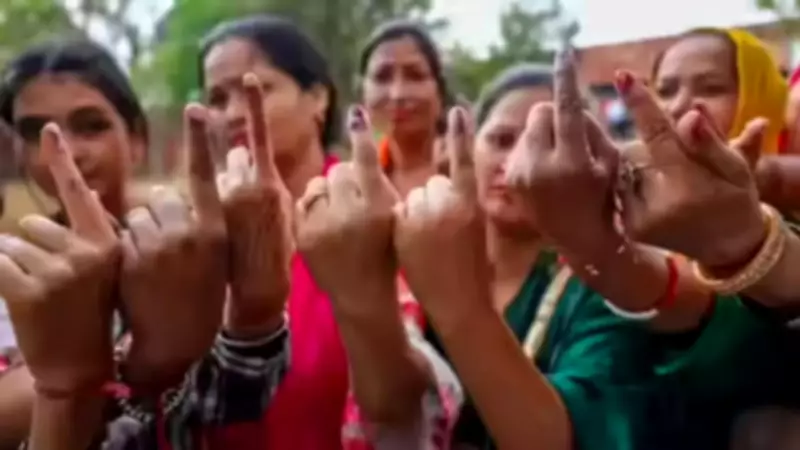
Kerala's Political Gender Gap Persists: Women's Representation Stuck at 9-13%
The enduring gender paradox in Kerala's political landscape is set to continue, with women's representation across the three major political fronts once again hovering between a disappointing 9% and 13%. Despite incremental gains over the decades, the state assembly is unlikely to see more than 8 to 12 women MLAs, well within its historical range and far below what would reflect the state's demographic reality.
Candidate Lists Reveal Familiar Pattern
The release of candidate lists for the upcoming elections reveals a familiar story in the numbers. The Bharatiya Janata Party (BJP) has fielded 14 women candidates, the Communist Party of India (Marxist) has nominated 11 women, the Indian National Congress has allotted tickets to 9 women, the Communist Party of India has 5 women candidates, the Indian Union Muslim League has 2, Twenty20 has 3, and the Bharath Dharma Jana Sena has 3. These figures may shift slightly once final nominations are confirmed, but the overall picture is unlikely to change significantly, maintaining the status quo of underrepresentation.
Internal Discontent Surfaces
Discontent has already surfaced within the United Democratic Front (UDF). Congress national spokesperson Shama Mohamed publicly criticized the party's approach, noting that only 9 of 92 tickets were allotted to women. She pointed to a similar pattern in the 2024 Lok Sabha elections, where just one woman was fielded from Kerala. "Denied but not defeated," she wrote on social media platform X, calling for greater support for women within the party.

Thiruvananthapuram MP Shashi Tharoor echoed the concern, though with caution. He acknowledged that allocating just 9.8% of seats to women is "not fair" in a state where women constitute half the population. At the same time, he noted that candidate selection involves multiple considerations, including winnability. Among those contesting, only a handful of sitting women MLAs are in the fray across UDF and Left Democratic Front (LDF). Notably, CPI's C K Asha has been denied a seat, while the constituency of K Jameela remains vacant following her death.
Beyond Numbers: A Cultural Problem
For historian and social critic J Devika, the issue goes beyond mere numbers. "It has become a joke. This has long ceased to be a matter for discussion—it should have translated into representation by now," she said. Devika argues that the problem is deeply rooted in political culture and requires more than superficial changes.
She finds some hope in Congress women, noting that they came together to raise their voices against Rahul Mamkootathil and forced his exit. Their willingness to speak openly about internal issues, she says, makes them more democratic than other parties. Devika emphasizes that the feminist movement in the state should focus on grooming and skilling women as leaders, pointing out that many have already proven themselves in governance in local bodies.
"Rather than merely lobbying the government, civil society feminism should be pressuring it to wake up," she said. Women in the state have long demonstrated their capabilities across every sector, yet they remain unable to push through a resolution for gender parity in political spaces.
Stark Contrast with Electorate
The contrast between representation and reality is stark. Women make up nearly 51% of Kerala's electorate—1.38 crore out of 2.69 crore voters, according to the state election commission's February 2026 data. Yet this numerical strength has not translated into proportional representation in candidate selection or legislative bodies.
If the women's reservation bill were implemented, Kerala could have as many as 47 women MLAs, creating a more balanced and representative assembly. For now, that remains a distant possibility. The state's highest representation—13 women legislators in 1996—still stands as a record, while its lowest points, in 1967 and 1977, saw just one woman in the assembly, highlighting how little progress has been made over the decades.

The persistence of this gender gap in one of India's most progressive states raises serious questions about political will, party structures, and the effectiveness of gender advocacy in transforming electoral politics. As Kerala prepares for another election cycle, the fundamental imbalance in political representation continues to undermine the state's reputation for social advancement and gender equality.





