Congress Leader Questions Youth Congress Protest at AI Summit
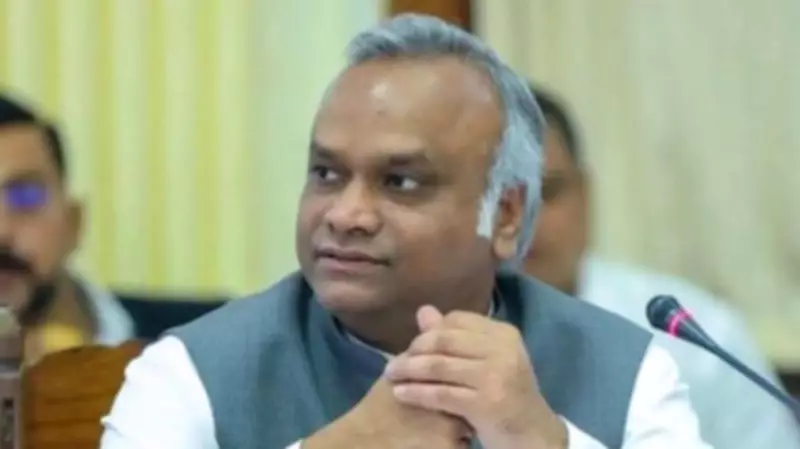
Congress leader Priyank Kharge has expressed reservations about the recent protest staged by the Youth Congress at the AI Impact Summit, stating he was "not sure that was in the right spirit." His comments come amid a political controversy surrounding the event, which has drawn attention to issues of technological sovereignty and national pride.
Kharge Criticizes BJP Over Chinese Product Projection
In a pointed remark, Kharge added that the Bharatiya Janata Party (BJP) should have been embarrassed over incidents where a university and several companies were found projecting Chinese products as their own. This allegation highlights concerns about the authenticity and origin of technology showcased at high-profile summits, raising questions about India's self-reliance in the tech sector.
Details of the AI Impact Summit Protest
The Youth Congress protest at the AI Impact Summit was aimed at drawing attention to what they perceive as failures in promoting indigenous innovation. However, Kharge's nuanced stance suggests internal divisions within the Congress party regarding protest tactics. Key aspects of the incident include:

- Protest Context: The demonstration occurred during a major technology conference, disrupting proceedings and sparking debates on political activism in professional settings.
- Political Implications: Kharge's comments may reflect a strategic shift, emphasizing policy critique over confrontational protests.
- Broader Issues: The controversy ties into larger discussions about India's technological dependence and the need for robust domestic manufacturing under initiatives like Make in India.
Analysis of the Chinese Product Controversy
Kharge's criticism of the BJP centers on allegations that Chinese-made items were misrepresented as Indian innovations at the summit. This has fueled political rhetoric, with implications for:
- National Security: Concerns over reliance on foreign technology, particularly from geopolitical rivals like China.
- Economic Policy: Scrutiny of government schemes aimed at boosting local production and reducing imports.
- Public Perception: Potential damage to India's image as an emerging tech hub if such incidents are not addressed transparently.
The incident underscores ongoing tensions in India's political landscape, where technology and nationalism increasingly intersect. As debates continue, Kharge's remarks signal a call for more substantive engagement on issues of innovation and integrity, rather than symbolic protests.