

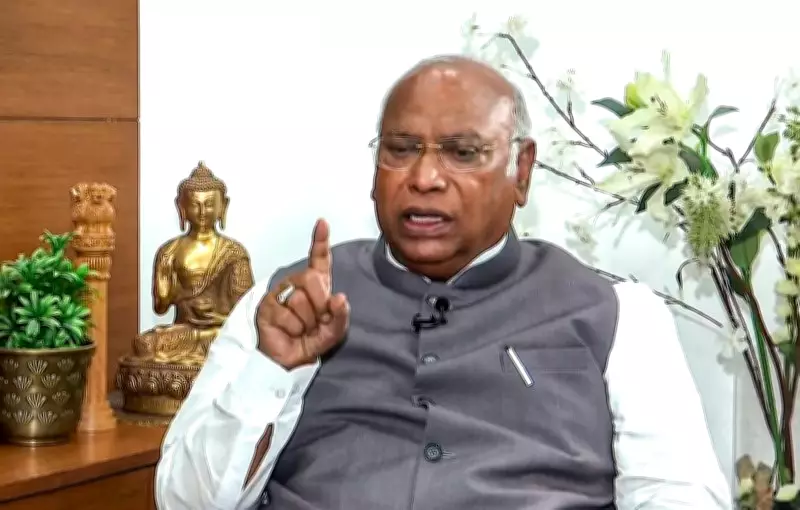
Kharge Questions Government's Haste in Amending Women's Reservation Law
Congress President Mallikarjun Kharge has raised serious concerns over the Centre's push to amend the women's reservation law, formally known as the Nari Shakti Vandan Adhiniyam, 2023. In a letter sent to Parliamentary Affairs Minister Kiren Rijiju on Thursday, Kharge questioned why the government is moving "in such haste" more than two years after the law was passed.
Demand for Post-Election Consultations
Kharge reiterated the Opposition's demand for an all-party meeting to discuss the implementation framework of the women's quota legislation. However, he suggested that such consultations should be held only after the ongoing round of Assembly elections concludes at the end of April. The Congress chief noted that Opposition parties had already communicated on March 24 that a meeting could be scheduled after April 29, citing their engagement in election campaigning.
He indicated that the timing of the proposed discussions, as suggested by the government, was not practical. Kharge received Rijiju's letter on March 26 seeking a meeting with the Congress on proposed amendments linked to the implementation of the law. He expressed that there is little clarity on why the government wants to move swiftly on further changes to a Constitutional amendment that was passed around 30 months ago.

Broader Political Context
This development comes amid broader political tensions, with Congress leader Jairam Ramesh also criticizing the government over reports of Pakistan being seen as a mediator in the ongoing conflict in West Asia. Ramesh called it a setback for India's regional diplomacy and took aim at External Affairs Minister S Jaishankar, stating that attempts are being made to manage what he described as an "embarrassing" diplomatic situation.
He questioned how Pakistan could be considered for any mediatory role, citing its past record on terrorism and involvement in nuclear proliferation. These remarks highlight the multifaceted challenges facing the government, from domestic legislative issues to international diplomatic maneuvers.
Key Points from Kharge's Letter
- Timing Concerns: Kharge emphasized the lack of urgency for amendments to a law passed over two years ago.
- Election Priorities: He argued that all-party meetings should wait until after the Assembly elections end in late April.
- Clarity Demanded: The Congress president sought more details on the proposed changes and the rationale behind the swift action.
The women's reservation law, aimed at enhancing female representation in Parliament and state legislatures, has been a contentious issue since its inception. Kharge's letter underscores ongoing debates about its implementation and potential modifications, reflecting broader political dynamics in India.






