

Kolkata Voter List Objections Spark Controversy Over Muslim Electors
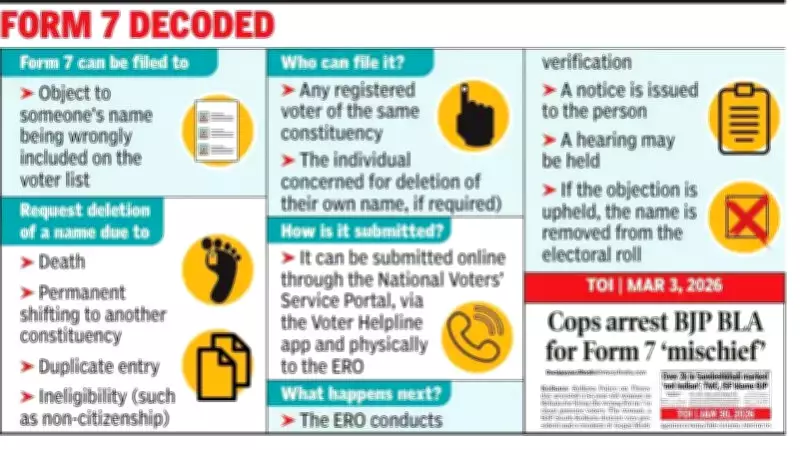
In a concerning development in Kolkata, the Election Commission of India's Form 7, a document used to object to a person's inclusion in the voters' list and seek deletion, has been filed against multiple electors in two specific wards, with all those targeted being Muslims. This has ignited debates over potential disenfranchisement and religious bias in the electoral process.
Ward 87: Objections Against 12 Electors
In Ward 87, which spans neighborhoods between Rashbehari Avenue and Sarat Chatterjee Avenue, Form 7 was submitted against 12 electors at a single booth. Among the notable names on the list are DIG North Bengal Syed Waqar Raza, heritage conservationist Mudar Patherya, and four members of a family residing on Sarat Bose Road, who are known to mayor Firhad Hakim's daughter Saba. All individuals targeted are Muslims, raising questions about the selection criteria.
Ward 89: Larger Scale with 40 Electors
In the neighboring Ward 89, the situation is even more pronounced, with Form 7 filed against 40 electors in one electoral booth. Again, all are Muslims, including rights activist Md Faruque-ul Islam and former Indian Oil executive Sk Golam Mehboob, along with his wife Flora and daughter Shabana. Many of these individuals only learned about the objections when Booth Level Officers (BLOs) returned for verification, after they had previously proven their credentials during the Summary Revision (SIR) exercise.

Verification Process and Concerns
The BLOs conducted fresh verifications, requiring live photographs and GPS coordinates to confirm residency. Mudar Patherya expressed frustration, stating, "I don't mind furnishing proof of citizenship. But there is a problem if it is demanded of me simply because of my faith." Sk Golam Mehboob suspected a deliberate move to disenfranchise those perceived as non-BJP voters, questioning why only Muslim names appeared on the list.
Political Connections and Denials
Two BJP activists have been linked to the Form 7 submissions. In Ward 87, Nabin Rai, the party's mandal sabhapati or block president, allegedly filed the forms, though he claimed to have submitted only two names of people he knew had moved out. In Ward 89, Asha Das, a member of the BJP's state committee mahila morcha, was named in an FIR filed at Charu Market Police Station for harassment, but she denied submitting any Form 7, suggesting someone else might have misused her name.
Broader Implications and Fears
Rights activist Nousheen Baba Khan, who documented the 40 Muslim names in Ward 89, fears this is a calculated strategy to disenfranchise non-BJP voters across the state. She noted that similar objections were filed in other parts of the same booth, and while BLOs verified credentials, many names might still be deleted. The Election Commission has clarified that individuals can submit any number of Form 7s to Assistant Electoral Registration Officers (AEROs), Electoral Registration Officers (EROs), or District Election Officers (DEOs).
Local Response and Accountability
Debashis Bose, TMC ward president and husband of Ward 87 councillor Manisha Bose, personally accompanied BLOs to all addresses. He confronted Nabin Rai, advising him to verify people before submitting names, to which Rai admitted he may have made mistakes. Bose questioned, "Why is the BJP afraid of people casting their votes?" highlighting the political tensions underlying these objections.
This incident underscores ongoing challenges in India's electoral integrity, with concerns over targeted actions based on religion and political affiliation, potentially affecting voter participation and trust in democratic processes.






