Congress MLA Seeks Assembly Entry Amid Supreme Court Bail Restrictions
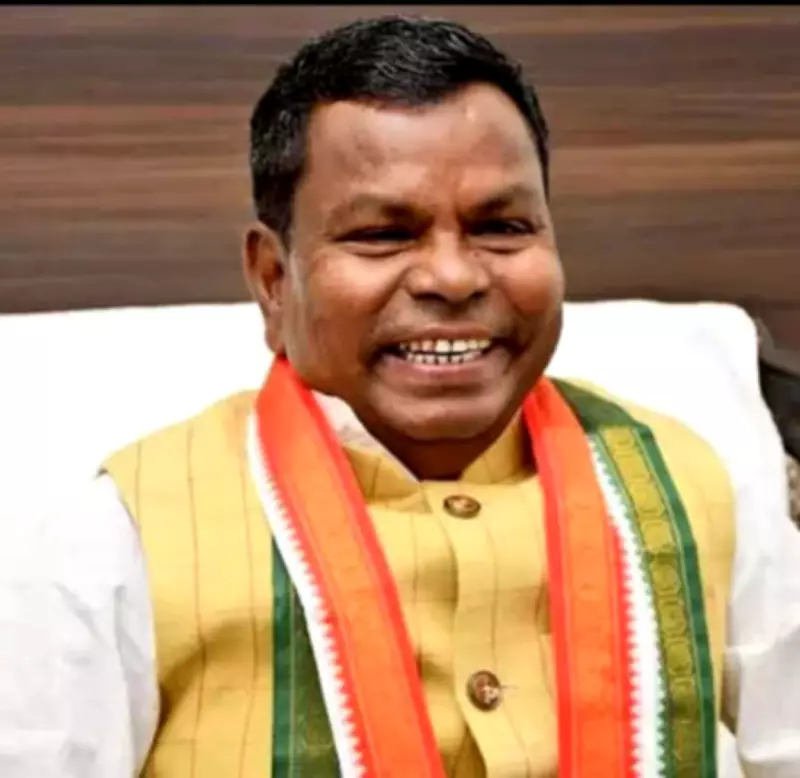
RAIPUR: Former Chhattisgarh excise minister and Congress legislator Kawasi Lakhma, currently out on bail in a high-profile money laundering case linked to the state's alleged liquor scam, has formally approached Assembly Speaker Raman Singh seeking permission to attend the upcoming budget session. The final decision now rests entirely with the Speaker, creating a significant constitutional and legal dilemma.
Supreme Court's Conditional Bail Order
The Supreme Court, while granting bail to the five-time tribal legislator from Bastar's Konta constituency, imposed a crucial condition: Lakhma must remain outside Chhattisgarh during the ongoing investigation period. However, in a nuanced ruling, the apex court explicitly left the decision regarding his participation in legislative assembly proceedings to the discretion of the Speaker.
According to the Supreme Court order excerpts: "As regards the petitioner's participation in the legislative assembly during the period when the investigation is going on and the court takes cognizance against him, an appropriate decision shall be taken by the learned Speaker of the state assembly. We do not express any opinion in relation thereto."

Speaker's Deliberation Process
Dinesh Sharma, Secretary of the Vidhan Sabha, confirmed to media that Kawasi Lakhma has personally met with Speaker Raman Singh to present his request for assembly attendance. This request comes despite the Supreme Court's clear directive for him to stay outside Chhattisgarh territory.
"The Speaker is yet to take a decision on this matter as there's still some time left for the session to begin," Sharma stated. "The matter is under careful consideration, and the Speaker will ensure to respect both the Supreme Court order and Lakhma's legitimate request before arriving at any conclusion."
If permission is granted, Lakhma would be permitted to enter the state capital specifically for the duration of the assembly proceedings, creating a temporary exception to the bail conditions.
Strategic Residence Arrangements
During his recent appearance before the Enforcement Directorate's special judge court, Lakhma informed the judicial authorities that he would reside in Malkangiri district of neighboring Odisha while complying with all bail conditions. The next hearing in this money laundering case is scheduled for February 20, just three days before the budget session commences on February 23.
This geographical arrangement proves strategically convenient, as Malkangiri lies merely 20-25 kilometers from Konta, Lakhma's assembly constituency. This proximity allows the veteran politician to maintain close contact with his political base and constituents while technically remaining outside Chhattisgarh as mandated by the Supreme Court's order.
Political analysts observe that this geographical arrangement facilitates continued political and social engagement without technically violating bail terms, providing Lakhma with operational flexibility during this legally constrained period.
Political Profile and Case Background
A prominent tribal face of the Congress party in the Bastar region, Kawasi Lakhma has been elected five consecutive times from the Konta constituency and previously served as excise minister in the Bhupesh Baghel-led government. His political career now faces significant challenges following his arrest by the Enforcement Directorate in connection with the alleged multi-thousand-crore liquor scam.
After remaining in judicial custody for several months, Lakhma secured bail but continues as an undertrial in the ongoing investigation. Despite these legal complications, he retains his elected position as Member of Legislative Assembly with nearly three years remaining in his current term, creating a complex intersection of legal proceedings and democratic representation.
The Speaker's impending decision will set an important precedent regarding legislative privileges versus judicial restrictions, particularly in cases where elected representatives face serious criminal charges while continuing to hold public office.