

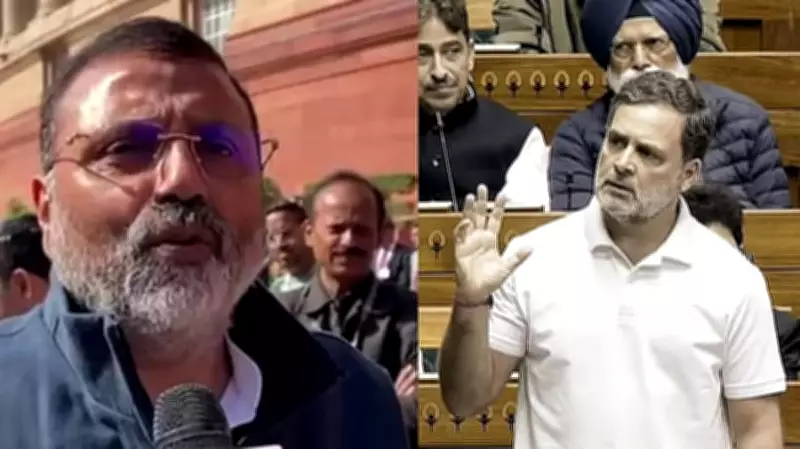
Lok Sabha Adjourned for the Day After Uproar Over BJP MP Nishikant Dubey's Remarks on Rahul Gandhi
The Lok Sabha witnessed significant turmoil on Thursday, leading to its adjournment for the entire day. The disruption was triggered by controversial remarks made by Bharatiya Janata Party (BJP) Member of Parliament Nishikant Dubey, which targeted Congress leader Rahul Gandhi. The incident highlights ongoing political tensions in India's parliamentary proceedings.
Details of the Controversial Remarks
During a session in the Lok Sabha, BJP MP Nishikant Dubey made statements that were perceived as highly critical and personal against Rahul Gandhi, a key figure in the Indian National Congress. While the exact wording of the remarks has not been fully disclosed in official reports, they reportedly sparked immediate outrage from opposition members, particularly those from the Congress party.
The remarks led to a vociferous protest on the floor of the house, with Congress MPs demanding an apology and the withdrawal of the comments. The uproar quickly escalated, making it impossible for normal parliamentary business to continue.

Parliamentary Proceedings Disrupted
As the protests intensified, the Speaker of the Lok Sabha attempted to restore order but was unsuccessful due to the persistent commotion. Members from the Congress and other opposition parties raised slogans and created a noisy environment, arguing that the remarks were disrespectful and violated parliamentary decorum.
In response, BJP members defended their colleague, leading to a heated exchange between the ruling and opposition benches. The situation deteriorated to such an extent that the Speaker had no choice but to adjourn the house for the day, citing the inability to conduct proceedings in a orderly manner.
Political Reactions and Implications
The incident has drawn sharp reactions from political leaders across the spectrum. Congress officials condemned the remarks as an attack on their party's leadership and called for strict action against Nishikant Dubey. They emphasized that such behavior undermines the dignity of Parliament and sets a negative precedent for political discourse.
On the other hand, BJP representatives argued that the remarks were made in the context of political debate and should not be blown out of proportion. They accused the opposition of overreacting to disrupt parliamentary work, especially on key legislative matters.
This event is part of a broader pattern of frequent adjournments and disruptions in the Lok Sabha, often driven by political clashes between the BJP and Congress. It raises concerns about the efficiency of parliamentary sessions and the impact on governance and policy-making in India.
Background on the Involved Figures
Nishikant Dubey is a prominent BJP MP known for his outspoken views and active participation in parliamentary debates. He has previously been involved in controversies related to his statements on various political issues.
Rahul Gandhi, a senior Congress leader and former president of the party, is a central figure in Indian politics and often a target of criticism from BJP members. His role in the opposition makes him a frequent subject of political attacks during parliamentary sessions.
The Lok Sabha, as the lower house of India's Parliament, is crucial for legislative processes, and such disruptions can delay important bills and discussions on national issues.
Conclusion and Future Outlook
The adjournment of the Lok Sabha highlights the ongoing political rivalry between the BJP and Congress, which continues to affect parliamentary functioning. As both sides trade accusations, the need for constructive dialogue and adherence to parliamentary norms becomes increasingly important.
Moving forward, it remains to be seen whether this incident will lead to any formal actions or apologies, or if it will simply add to the list of parliamentary disruptions. The focus should ideally shift back to substantive debates on national matters to ensure effective governance.






