Massive 148-Km Protest March Underway in Maharashtra
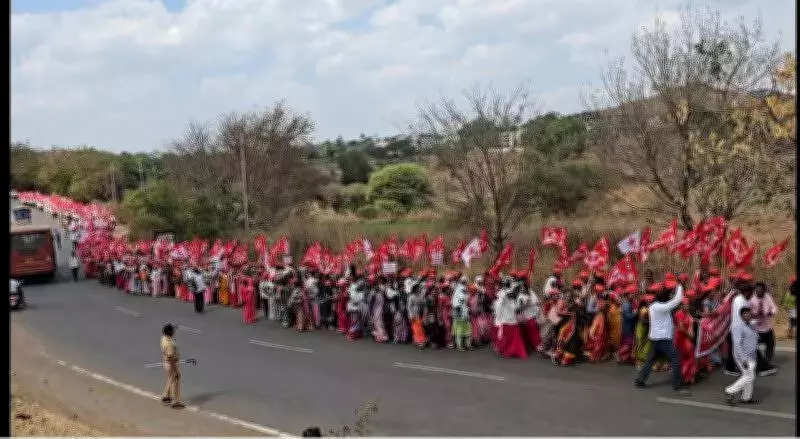
Scores of farmers, tribal community members, casual laborers, and health workers joined forces on Tuesday in a significant demonstration organized by the All India Kisan Sabha (AIKS) and the Centre of Indian Trade Unions (CITU). The collective action represents growing frustration among rural and working-class communities in the state.
March Route and Demands
The protest march commenced from Rajur village in Akole taluka of Ahmednagar district, with participants setting out toward the district collectorate office. The journey will cover approximately 148 kilometers on foot, passing through Akole and Rahata talukas before reaching the Ahmednagar district headquarters.
Organizers have outlined several core demands that form the basis of this mobilization:

- Proper implementation of the Forest Rights Act to grant land rights to tribal communities
- Adequate drinking water and irrigation facilities for farming villages
- Regular payment for Anganwadi workers and healthcare staff
- Implementation of state and central government-sanctioned minimum wages across sectors
Leadership Perspectives and Historical Context
Ajit Nawale, the state secretary of AIKS, emphasized the broad support for the movement, stating, "The march started from Rajur village in Akole taluka with hundreds of participants from diverse backgrounds. We are walking to the district collectorate office to present our demands, and if they remain unaddressed, we will determine our next course of action."
Nawale highlighted the primary objective of securing land rights under the Forest Rights Act, explaining, "Tribal people must receive proper land titles with their names officially recorded. Additionally, farmers require sufficient water resources for both consumption and agriculture to improve their livelihoods and reduce forced migration from villages."
The AIKS leader also addressed wage concerns, noting that Anganwadi workers deserve timely payments while laborers across various industries should receive at least the government-mandated minimum wages.
Broader Infrastructure Demands
Beyond immediate livelihood issues, the protest incorporates infrastructure development concerns. Nawale specifically mentioned the Nashik-Pune semi-high-speed railway project, advocating for its original alignment through Akole, Sangamner, and Junnar. This route would substantially benefit local agricultural communities and tribal populations by improving connectivity and economic opportunities.
Nawale referenced previous unfulfilled promises, including one from district guardian Minister Radhakrishna Vikhe Patil, who had committed to arranging a meeting between Chief Minister Devendra Fadnavis and local residents during earlier protests at Bota Village. That promised meeting never occurred, adding to the organizers' determination to continue pressing their demands through sustained action.
Historical Precedents and Government Response
The current march follows several previous protests that organizers claim yielded inadequate government implementation. Nawale pointed to earlier long marches from Nashik and Thane, as well as demonstrations in 2023 including one from Akole to Loni. The perceived failure to honor agreements from these prior actions has motivated this renewed mobilization.
As the march progresses toward Ahmednagar, participants remain committed to their 148-kilometer journey, symbolizing both their physical endurance and their determination to secure fundamental rights regarding land, water, wages, and infrastructure development that directly impacts rural Maharashtra's most vulnerable communities.