Mamata Banerjee's Legal Journey: A Prelude to Her Supreme Court Battle
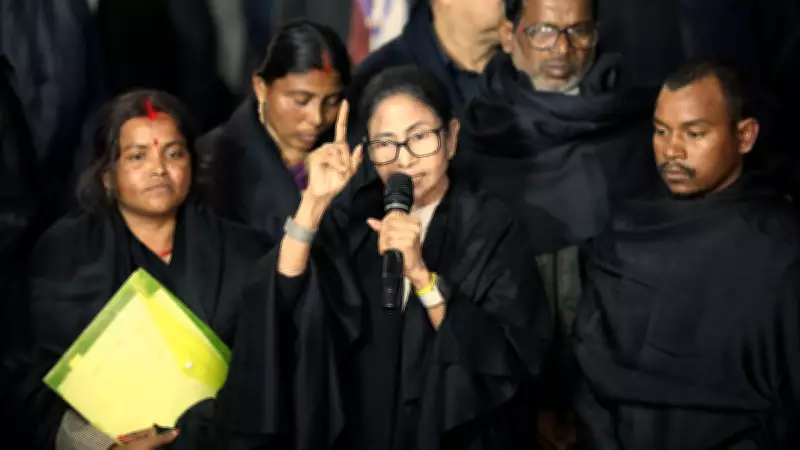
West Bengal Chief Minister Mamata Banerjee's recent appearance in the Supreme Court to challenge the Election Commission's Special Intensive Revision of electoral rolls has sparked widespread political attention. However, this high-profile legal confrontation is not her first foray into the courtroom. Long before leading the Trinamool Congress, Banerjee donned the lawyer's robe during her tenure with the Congress party, advocating for arrested workers in at least three notable cases.
Early Legal Engagements in Student Politics
Banerjee's legal career began shortly after she earned her law degree from Jogesh Chandra College of Law, affiliated with Calcutta University, in 1982. By then, she was already immersed in student politics, actively campaigning for the Chhatra Parishad, the Congress's student wing. Her induction into the Youth Congress in 1983 set the stage for her first courtroom appearance.
In 1984, a political controversy erupted over the murder of a school headmaster in Kumarganj, Dakshin Dinajpur district. As protests flared, Youth Congress workers joined the agitation, leading to several arrests. Banerjee stepped in as their legal representative, arguing for bail in a Balurghat court. Shankar Chakraborty, a local Youth Congress leader who later became a Cabinet minister under Banerjee, recalled this incident vividly. He mentioned how Banerjee requested a black gown and confidently presented the case, ultimately securing bail for the detained workers.

Decade-Later Courtroom Return and Political Turning Point
Nearly a decade later, Banerjee returned to the courtroom amidst escalating political tensions. On July 21, 1993, she led a Youth Congress protest in Kolkata demanding mandatory photo IDs for voters. The demonstration turned violent, with police using tear gas and lathi charges, culminating in a firing that killed 13 people. Subsequently, 40 Youth Congress workers were arrested on alleged false charges.
By this time, Banerjee was a Union Minister of State in the P V Narasimha Rao-led Congress government, though her influence within the party was waning. The firing incident proved to be a pivotal moment, eventually leading to her break from the Congress and the formation of the Trinamool Congress in 1998. In July 1996, she appeared before the Chief Judicial Magistrate in Kolkata's Bankshall Court, advocating for the bail of the arrested workers, demonstrating her unwavering support for her colleagues.
Additional Legal Advocacy in the 1990s
Banerjee's legal efforts extended beyond these high-profile cases. TMC leader and former Rajya Sabha MP Shebhashish Bhattacharya, himself a lawyer, recounted another instance where she argued in an Alipore court during the 1990s. This followed the ransacking of the Regent Park police station, resulting in the arrest of workers, including the late Pankaj Banerjee. She successfully secured bail for them, highlighting her dedication to legal defense.
In July 1997, Banerjee also represented the family of Haladhar Mondol, who died in a police firing in Guptipara, Hooghly. She argued their case in a district court at Chinsurah just a day after the incident, underscoring her commitment to justice for common people.
Legacy and Current Supreme Court Challenge
Reflecting on Banerjee's legal history, Bhattacharya emphasized that she has always stood up for Bengal's common people, maintaining her identity as a fighter even as Chief Minister. Her recent Supreme Court appearance, where she filed a plea against the EC's SIR, alleging large-scale disenfranchisement, echoes this legacy. The court issued a notice to the EC, marking a significant step in the ongoing electoral dispute.
TMC spokesperson Kunal Ghosh praised Banerjee's efforts, stating that she has consistently supported the people and achieved a moral victory by challenging the EC to protect voting rights. This legal battle not only revisits her past courtroom experiences but also reinforces her role as a formidable advocate in Indian politics.