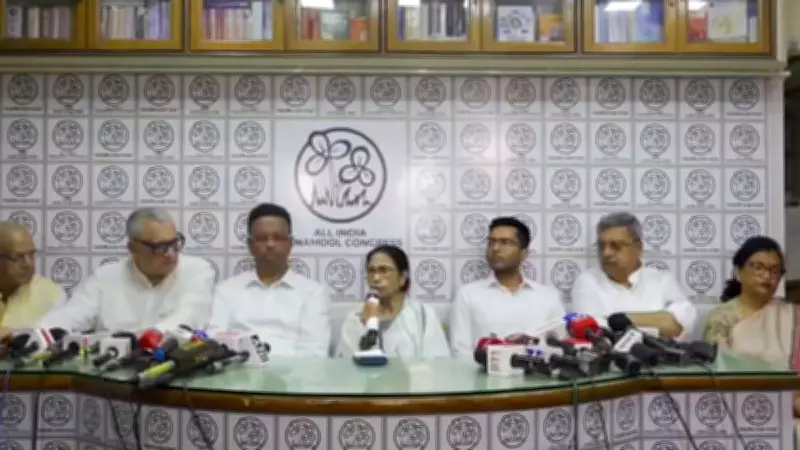
West Bengal Chief Minister Mamata Banerjee has refused to resign after her party, the Trinamool Congress, suffered a defeat in the recently concluded state assembly elections. The Bharatiya Janata Party, which emerged victorious, has demanded her immediate resignation, citing the convention that a chief minister must step down after losing power. However, Banerjee has cited constitutional provisions to justify her decision to continue in office until the new government is sworn in.
What the Constitution Says
According to Article 164 of the Indian Constitution, the chief minister holds office during the pleasure of the governor. However, there is no specific provision that mandates a chief minister to resign immediately after losing an election. The chief minister can continue in office until the governor appoints a new chief minister. The governor, in turn, is bound by the principle that the government must enjoy the confidence of the legislative assembly.
Precedents and Conventions
Historically, several chief ministers have chosen to resign soon after election results indicate a loss. However, there have been instances where outgoing chief ministers have remained in office for a few days to ensure a smooth transition. For example, in 2014, then Andhra Pradesh Chief Minister N. Chandrababu Naidu resigned after his party lost, but he continued as caretaker until the new government took over. Similarly, in 2019, Karnataka Chief Minister H.D. Kumaraswamy resigned after losing a trust vote but remained in office until his successor was sworn in.

Can the Governor Force a Resignation?
The governor can dismiss a chief minister if the government loses the confidence of the assembly. However, the governor must be satisfied that the chief minister no longer commands a majority. In the current scenario, the BJP has claimed majority support, but Banerjee has not yet faced a floor test. The governor can summon a special session of the assembly to prove majority, but this process can take time.
Legal experts suggest that Banerjee's refusal to resign is not unconstitutional, but it may be politically contentious. The BJP has announced plans to move the Supreme Court if Banerjee does not step down soon. The matter highlights the need for clearer rules regarding the transition of power after elections.
What Happens Next?
The governor is expected to invite the BJP to form the government. Once the BJP stakes its claim, Banerjee will be constitutionally bound to resign. Until then, she can continue as chief minister, though her authority may be challenged. The situation underscores the importance of conventions in India's parliamentary democracy, where the letter of the law often leaves room for interpretation.