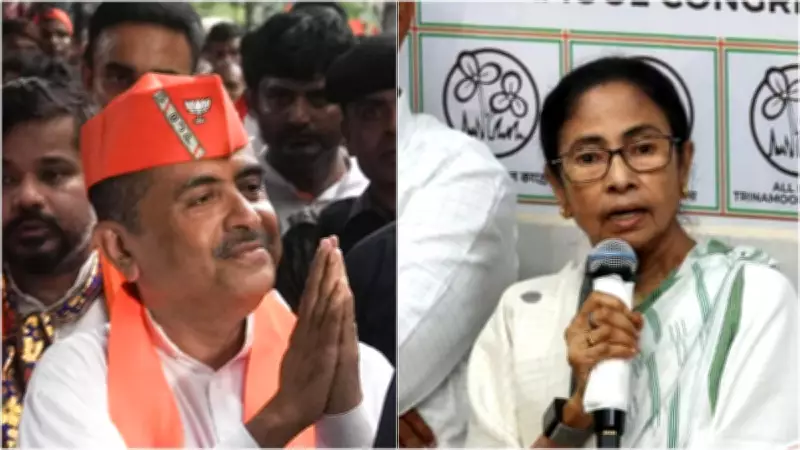
A defiant Mamata Banerjee has declared that she will not step down from the post of Chief Minister of West Bengal, asserting that everything is clearly written in the Constitution. This statement comes in response to the Bharatiya Janata Party's (BJP) demand for her resignation after the party secured a landslide victory in the state assembly elections.
BJP's Landslide Victory
The BJP won 207 out of the 293 constituencies where polling took place on April 23 and 29, with votes counted on Monday. This overwhelming majority has given the BJP a clear mandate to form the next government in West Bengal, ending Mamata Banerjee's Trinamool Congress (TMC) rule.
Mamata's Defiant Stand
In a press conference held shortly after the results were announced, Mamata Banerjee remained unyielding. She stated that the Constitution of India does not require her to resign immediately and that she will continue to serve as Chief Minister until a new government is formed. She accused the BJP of trying to undermine democratic processes and warned against any attempts to destabilize the state.

“I will not resign. Everything is written in the Constitution. The BJP cannot force me to step down,” Banerjee said, her voice firm. She also criticized the Election Commission and the central government for what she called a biased conduct during the elections.
Political Implications
The situation has created a constitutional and political impasse. While the BJP has the numbers to form a government, Mamata Banerjee's refusal to resign could lead to a prolonged legal battle. Political analysts suggest that the Governor may step in to resolve the deadlock, potentially recommending President's rule if the current government refuses to vacate office.
The TMC has announced plans to challenge the election results in court, alleging widespread irregularities and voter manipulation. The party has called for a state-wide protest, urging supporters to remain peaceful but vigilant.
- BJP leaders have dismissed Mamata's claims as a desperate attempt to cling to power.
- They have called for her immediate resignation to uphold democratic norms.
- The TMC, however, maintains that they will explore all legal avenues to challenge the outcome.
Constitutional Provisions
Article 164 of the Indian Constitution states that the Chief Minister holds office during the pleasure of the Governor. However, convention dictates that a Chief Minister should resign if their party loses the confidence of the assembly. The exact timeline for resignation is not specified, leading to the current standoff.
As the political drama unfolds, the people of West Bengal watch closely, hoping for a peaceful resolution that respects the democratic mandate. The coming days will be crucial in determining the state's political future.