

Manipur's New Government Sparks Kuki-Zo Community Tensions Over BJP's Peace Formula
The recent political developments in Manipur have taken a dramatic turn, with the formation of a new government initially raising hopes for reconciliation but quickly descending into renewed conflict. The appointment of key political figures has exposed deep-seated divisions within the state's tribal communities, particularly the Kuki-Zo group, leading to violent clashes and highlighting the challenges of achieving lasting peace.
A Brief Moment of Optimism in Manipur's Political Landscape
On February 4, 2026, a significant political ceremony unfolded in Manipur as Meitei legislator Yumnam Khemchand Singh was sworn in as the state's new chief minister. The event gained additional significance with the simultaneous appointment of two tribal deputy chief ministers: Nemcha Kipgen, representing the Kuki community, and Losi Dikho from the Naga community. This carefully constructed political arrangement by the reinstated National Democratic Alliance government was widely interpreted as a strategic move to bridge the longstanding divide between Manipur's hills and valley regions.
The inclusion of representatives from major tribal communities in key government positions was seen as a potential breakthrough in the state's complex ethnic politics. Political observers noted that this power-sharing formula appeared designed to address historical grievances and create a more inclusive governance structure. For a brief moment, there was genuine optimism that this political configuration might pave the way for meaningful dialogue and reconciliation between different ethnic groups in the northeastern state.

Rapid Unraveling of Political Harmony
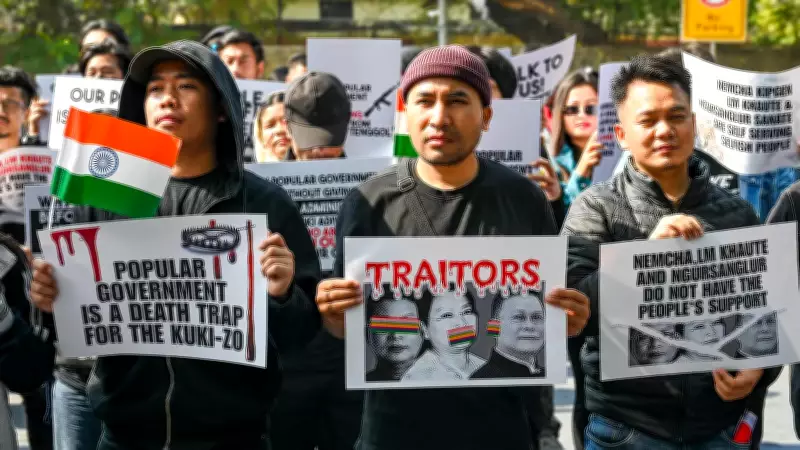
The optimism proved remarkably short-lived, lasting less than twenty-four hours before giving way to renewed tensions. On February 5, 2026, violent clashes erupted in Churachandpur district between protesters and security forces, resulting in approximately a dozen injuries. The confrontation marked a dramatic escalation of simmering resentment within the Kuki-Zo community, transforming what had been internal discontent into open, public resistance.
The focal point of this resistance centered specifically on Bharatiya Janata Party legislator Nemcha Kipgen's controversial decision to accept the deputy chief minister position in the new cabinet. While the BJP leadership had likely viewed Kipgen's appointment as a conciliatory gesture toward the Kuki-Zo community, significant segments of that community interpreted the move quite differently. Rather than seeing it as representation, many within the Kuki-Zo community perceived Kipgen's acceptance of the cabinet role as political capitulation that failed to address their core concerns and grievances.
Deepening Divisions Within the Kuki-Zo Community
The violent protests in Churachandpur revealed profound internal divisions within the Kuki-Zo community regarding political strategy and representation. This "Kuki-versus-Kuki" dynamic has created a complex political landscape where community members are divided over how best to pursue their collective interests within Manipur's political framework.
Key factors contributing to the community's internal rift include:- Differing perspectives on whether participation in government institutions represents genuine political empowerment or symbolic appeasement
- Varying assessments of whether the BJP's peace formula addresses substantive issues or merely creates the appearance of inclusion
- Divergent views on political tactics, with some advocating for negotiation and others favoring more confrontational approaches
- Disagreements about leadership and representation within the community's political structures
The clashes in Churachandpur demonstrate that the BJP's carefully crafted political formula has inadvertently exposed and exacerbated existing fault lines within the Kuki-Zo community. Rather than unifying the community behind a common political agenda, the appointment has highlighted competing visions for how the community should engage with state and national political structures.

Broader Implications for Manipur's Political Future
The rapid transition from optimism to conflict following the new government's formation raises serious questions about the viability of current political approaches to addressing Manipur's complex ethnic divisions. The events of early February 2026 suggest that symbolic political appointments, while potentially valuable as confidence-building measures, may be insufficient to address deeper structural issues and historical grievances.
Political analysts note that the situation presents significant challenges for the BJP-led government, which must now navigate not only the traditional hill-valley divide but also increasingly complex intra-community dynamics. The "Kuki-vs-Kuki" dimension adds another layer of complexity to an already challenging political environment, requiring more nuanced approaches to conflict resolution and political representation.
The unfolding situation in Manipur serves as a reminder that political solutions to deeply rooted ethnic conflicts require more than carefully balanced cabinet appointments. Genuine reconciliation demands addressing substantive issues of representation, resource allocation, and historical grievances through inclusive dialogue and meaningful institutional reforms.




