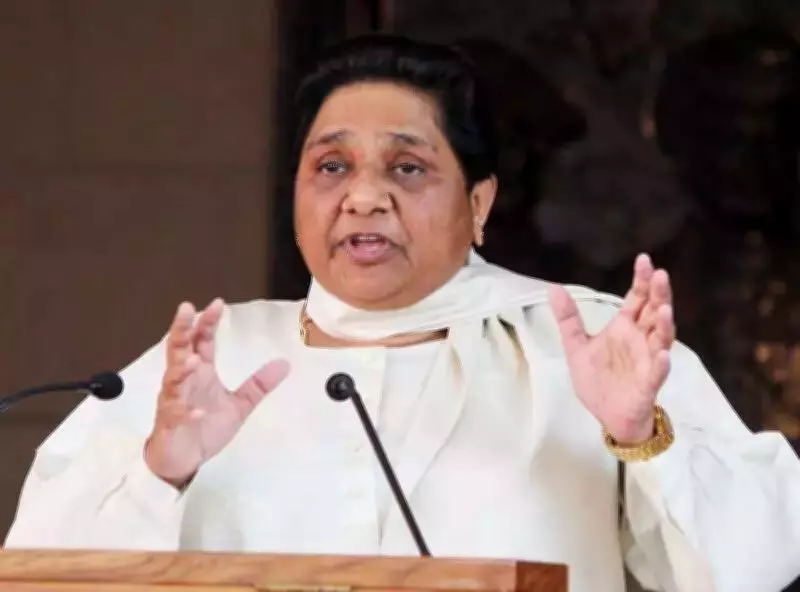
In a significant development from Lucknow, Bahujan Samaj Party (BSP) national president Mayawati has strongly criticized the ongoing protests against the University Grants Commission's (UGC) new rule mandating the establishment of Equity Committees in government colleges and private universities. Speaking on Wednesday, the veteran politician labeled these demonstrations as inappropriate and driven by casteist mentalities.
Mayawati's Strong Stance on Caste-Based Protests
Mayawati expressed her views through a detailed post on the social media platform X, where she directly addressed the controversy surrounding the UGC's directive. The BSP chief asserted that the protests, primarily organized by individuals from the general category, are fundamentally flawed in their approach. She emphasized that these demonstrations are being conducted under the pretext that the Equity Committee provisions are discriminatory against them, which she categorically rejected.
The Core Issue: Addressing Caste Discrimination
The new UGC rule aims to establish Equity Committees specifically designed to tackle caste-based discrimination within India's higher education institutions. Mayawati highlighted that opposition to certain provisions of this rule by those belonging to the general category is not justified. She argued that such resistance undermines efforts to create a more inclusive and equitable academic environment for all students, particularly those from marginalized communities.

According to Mayawati, the protests reflect a deeper issue of casteist mentality among some sections of society. She warned that this opposition could perpetuate social tensions rather than foster harmony. The BSP leader stressed that the primary objective of the Equity Committees is to ensure that Dalits, backward classes, and other disadvantaged groups receive fair treatment and opportunities in educational settings.
Call for Consensus and Caution
In her statement, Mayawati also outlined her party's perspective on the implementation of such rules. The BSP believes that taking everyone into confidence before rolling out these regulations is a more effective approach. This method, she noted, helps prevent social discord and builds broader support for initiatives aimed at combating discrimination.
"Governments and all institutions must pay attention to this," Mayawati added, urging authorities to prioritize consensus-building and transparent communication. She emphasized that proactive engagement with all stakeholders can mitigate misunderstandings and reduce the likelihood of contentious protests.
Advice to Marginalized Communities
Mayawati also directed a message to Dalits and backward classes, advising them to remain vigilant against provocative statements from certain leaders. She cautioned that selfish and sellable leaders from these communities might attempt to mislead them for personal gain. The BSP chief urged these groups to stay focused on the broader goal of achieving social justice and not be swayed by divisive rhetoric.
Her remarks underscore the ongoing challenges in addressing caste-based issues within India's educational framework. The controversy over the UGC's Equity Committee rule highlights the delicate balance between implementing affirmative action policies and managing perceptions of fairness among different social groups.
As the debate continues, Mayawati's intervention adds a prominent political voice to the discussion, emphasizing the need for thoughtful implementation and inclusive dialogue. The situation in Lucknow serves as a microcosm of the larger national conversation on caste, education, and equity in contemporary India.