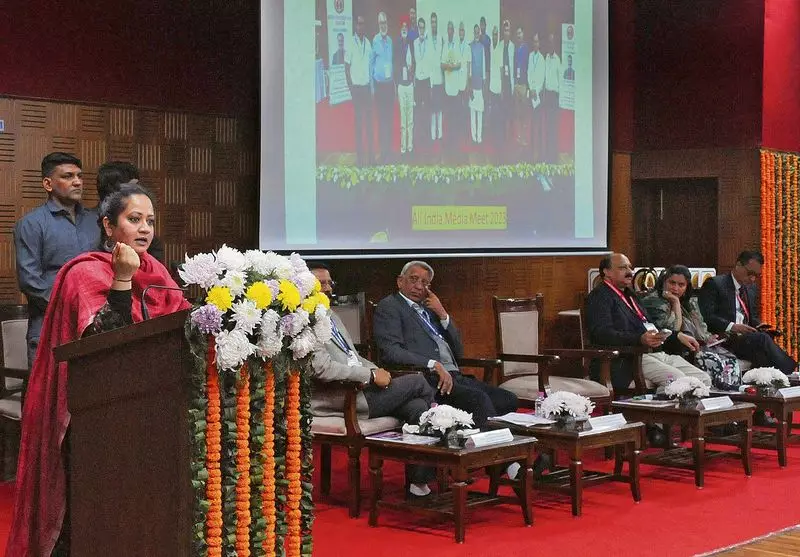
In a significant show of unity, major media unions from across India convened in the national capital to voice their collective demands and concerns. The central themes of the national meeting were a firm opposition to the government's four new labour codes and a strong push for the immediate constitution of a fresh wage board for journalists and non-journalist newspaper employees.
Unions Unite Against Labour Codes
The gathering saw participation from prominent organizations including the Indian Journalists Union (IJU), the All India Newspaper Employees Federation, and the Delhi Union of Journalists (DUJ). The unions passed a resolution expressing their staunch opposition to the four labour codes. They argue that these codes, which aim to consolidate and replace 29 existing labour laws, will severely undermine the hard-won rights and job security of media workers.
The unions fear the codes will dilute provisions related to working hours, social security, and the right to form unions. They believe the new framework favors employers and could lead to increased contractualization of the workforce, making journalists and other staff more vulnerable. The resolution called for the withdrawal of these codes to protect the interests of media professionals.

Urgent Demand for a New Wage Board
A primary and urgent demand that emerged from the meet was the constitution of the 13th Wage Board for journalists and non-journalist newspaper employees. The last wage board, the Majithia Wage Board, was implemented over a decade ago. The unions contend that with the rising cost of living and the changing media landscape, a new board is essential to ensure fair and revised wages, allowances, and service conditions for all employees in the newspaper industry.
They criticized the government for the delay in forming this board, stating that it directly impacts the economic well-being of thousands of media workers. The demand is rooted in the Working Journalists and Other Newspaper Employees (Conditions of Service) and Miscellaneous Provisions Act, 1955, which mandates such wage boards to periodically revise pay structures.
Broader Concerns for Media Freedom and Security
Beyond wages and labour laws, the unions also highlighted growing threats to press freedom and the safety of journalists. The meeting expressed deep concern over the increasing instances of attacks, legal harassment, and intimidation faced by reporters, particularly those working in remote or conflict-prone areas.
There was a call for stronger mechanisms to ensure the safety of journalists and to uphold the freedom of the press as a cornerstone of democracy. The unions emphasized that without a secure and financially stable workforce, the integrity and independence of the media are at risk.
The national meet served as a platform to consolidate the voices of media workers from different states and affiliations. It concluded with a plan to intensify advocacy and pressure on both the central government and newspaper managements to address these critical issues. The unified stance signals a determined push from the ground to safeguard the rights and future of those working in India's vibrant media sector.