

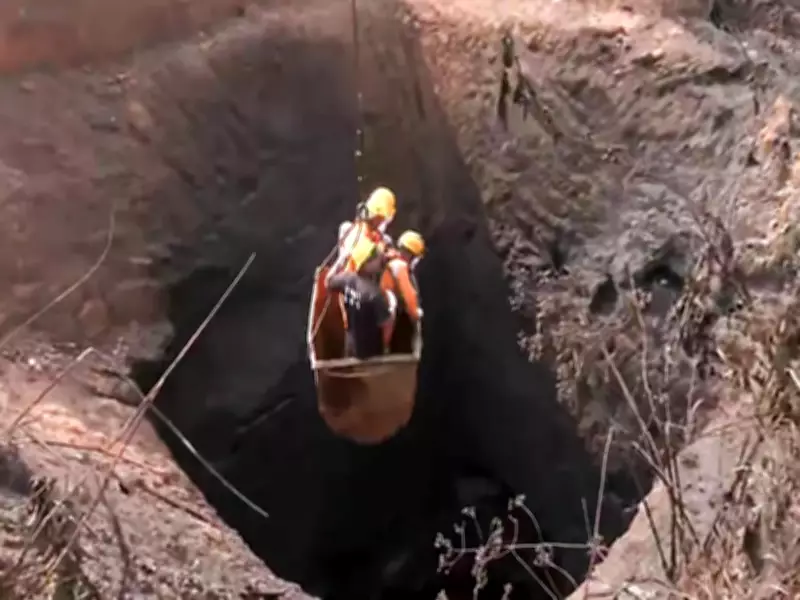
Meghalaya Coal Mine Tragedy: Death Toll Climbs to 25, Illegal Mining Under Fire
The death toll from Thursday's devastating dynamite explosion inside an illegal coal mine in Meghalaya's East Jaintia Hills district has tragically risen to 25 as of Friday. The blast, which occurred at the Mynsyngat-Thangsko site under the Umpleng police outpost, has once again exposed the deadly persistence of illegal mining operations in the region.
Rescue Operations and Casualty Details
East Jaintia Hills Superintendent of Police Vikash Kumar confirmed that four additional bodies were retrieved from the pit on Friday, while three miners who had been rescued in an injured state succumbed to their wounds. This brings the total number of recovered bodies to 22, with 17 already identified and handed over to their families after necessary legal formalities.
Search operations involving the State Disaster Response Force (SDRF), National Disaster Response Force (NDRF), and medical teams were temporarily halted with nightfall, but officials warned the final casualty figure could rise further as more miners are feared trapped inside the illegal rat-hole mine.

Victims and Injuries
The victims include two brothers from Nepal and six workers from Assam's Barak Valley. According to a PTI report, the Nepalese siblings have been identified as Purna Bahadur Khapangi Magar (27) and Surendra Khapangi Magar (24), residents of Salghari Bhanjyang, Barahapokhari Rural Municipality, Khotang district. Both died instantly in the explosion.
Relatives at the site revealed that three other workers from the same village were injured—Nar Bahadur (35), Bam Bahadur (45), and Karna Bahadur (40)—with the condition of Nar Bahadur and Bam Bahadur reported as critical. Another Nepali worker, Lalit Bahadur Magar of Udayapur district, also sustained injuries.
Of the seven Nepalese labourers employed at the mine, only one, Tarabal Magar, escaped unhurt. He later phoned families back home to inform them of the tragedy. The group had left their village in Nepal on December 18 last year to seek employment in Meghalaya's coal mines.
Seven other injured miners remain under treatment in hospitals across Meghalaya and Assam, with their conditions being closely monitored by medical teams.
Police Action and Investigation
Police have arrested two persons in connection with the case—Forme Chyrmang and Shamehi War. Both have been produced before the court and remanded in three-day police custody. Authorities have registered a suo motu FIR at Ksliehriat police station under the Bharatiya Nyaya Sanhita (BNS), Mine and Minerals (Development and Regulation) Act, and Explosives Substances Act.
"Efforts are on to identify and apprehend other accused persons involved in the case," SP Vikash Kumar stated, emphasizing the seriousness with which authorities are treating the incident.
Government Response and Political Reactions
The Government of Meghalaya has ordered a comprehensive inquiry into the incident, with Chief Minister Conrad K Sangma asserting that accountability would be fixed and those responsible would face strict legal action. "We are committed to ensuring such tragedies do not recur," Sangma declared.
Union Home Minister Amit Shah has assured Chief Minister Sangma of full support from the Centre in rescue operations, while Union Coal and Mines Minister G Kishan Reddy termed the blast a result of illegal mining activities. Reddy stressed that no Government of India coal mines operate in Meghalaya and has sought a detailed report from the state government.
"All states must strictly enforce mining laws to prevent such incidents," Reddy urged, highlighting the need for stronger regulatory oversight.
Military Support and Ongoing Monitoring
Officials confirmed that the Army and Air Force remain on standby as the district administration and state disaster management authority continue to monitor the situation closely. The multi-agency response reflects the gravity of the incident and the challenges posed by the remote location of the illegal mine.

Historical Context of Illegal Mining in Meghalaya
This tragedy has once again exposed the deadly persistence of illegal coal mining in Meghalaya, which was banned by the National Green Tribunal in 2014 but remains rampant in the state. The rat-hole mining technique, particularly dangerous and environmentally destructive, continues to claim lives despite regulatory measures.
The incident serves as a stark reminder of the human cost of illegal mining operations and the urgent need for stricter enforcement of mining regulations across India's northeastern states.





