

India's landmark rural employment guarantee scheme, the Mahatma Gandhi National Rural Employment Guarantee Act (MGNREGA), has been formally replaced by a new law, triggering a major political confrontation. The Viksit Bharat Guarantee for Rozgar and Ajeevika Mission (Gramin) Bill, or VB-G RAM G, was passed by Parliament on Thursday, setting off vociferous protests from opposition parties who accuse the government of dismantling a crucial social safety net.
Minister Chouhan Counters "Misinformation", Details New Guarantees
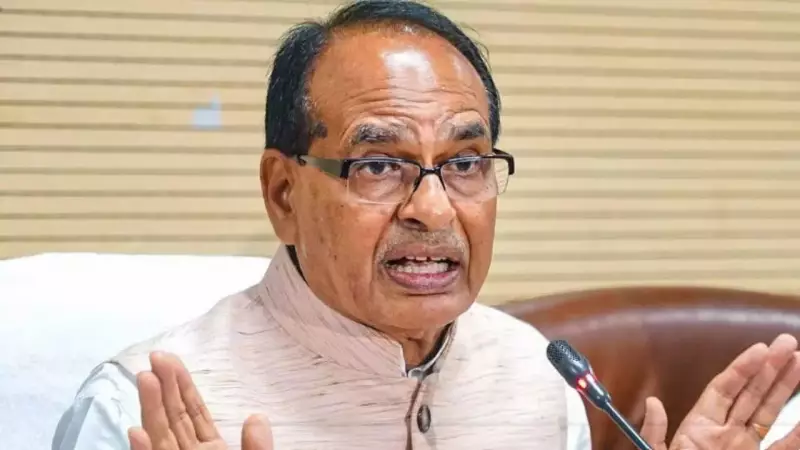
Facing mounting criticism, Rural Development Minister Shivraj Singh Chouhan addressed the nation in a video message on Sunday. He alleged a "conspiracy is underway to mislead the country in the name of MGNREGA" and positioned the new VB-G RAM G scheme as a progressive step forward.
Chouhan outlined key enhancements in the new law, emphasizing that it provides a legal guarantee of 125 days of work, up from the previous 100 days under MGNREGA. He stated that provisions for unemployment allowance, in case work is not provided, have been strengthened, and additional amounts will be paid if wages are delayed.

"For this scheme, a massive amount of more than Rs 1,51,282 crore has been proposed this year itself," Chouhan said, assuring that sufficient funds are allocated for employment generation and comprehensive village development. He highlighted that administrative expenses have been increased from 6% to 9%, which translates to approximately Rs 13,000 crore for timely salaries of ground-level staff like panchayat secretaries and employment assistants.
Opposition Rallies: Congress and Left Decry "Desecration" of MGNREGA
The opposition has launched a coordinated attack against the government's move. The Congress held protests across its district headquarters nationwide on Sunday, accusing the Modi government of "effectively dismantling MGNREGA by converting it from a right to a favour."
Congress leader KC Venugopal argued that MGNREGA was a legal right to work, not a welfare handout. He accused the BJP of turning this right into a budget-dependent scheme by capping funds and centralizing control, thereby pushing "crores of rural families into insecurity and distress." The party has announced it will deliberate on the issue at its Congress Working Committee meeting on December 27, followed by programs in mandals and panchayats on December 28, the party's Foundation Day.
Adding to the chorus, Left parties have called for a pan-India protest on Monday, demanding the government withdraw the Bill. Congress Parliamentary Party chairperson Sonia Gandhi, in a video message on Saturday, accused the government of "bulldozing" MGNREGA and vowed to fight against the "black law." Her statement followed Rahul Gandhi's pledge that the Congress would force the government to withdraw the new legislation.
The Road Ahead: A Deepening Political Fault Line
The passage of the VB-G RAM G Bill marks a significant shift in India's rural employment policy, ending the two-decade reign of MGNREGA. While the government frames it as an upgraded, more robust scheme favoring the poor and development, the opposition sees it as an erosion of a fundamental right that provided dignity and economic security to millions.
This issue has crystallized into a major political battle, with both sides preparing for a prolonged struggle. The government, through Minister Chouhan, is on a mission to "take the truth to the people," while the opposition is mobilizing its cadre nationwide to defend what it calls a "groundbreaking law." The coming days are likely to see intensified political maneuvering and public discourse as the implications of the new law become clearer.






